Toronto permit data
Street Occupation Permits for Bins in Toronto
Published September 22, 2026
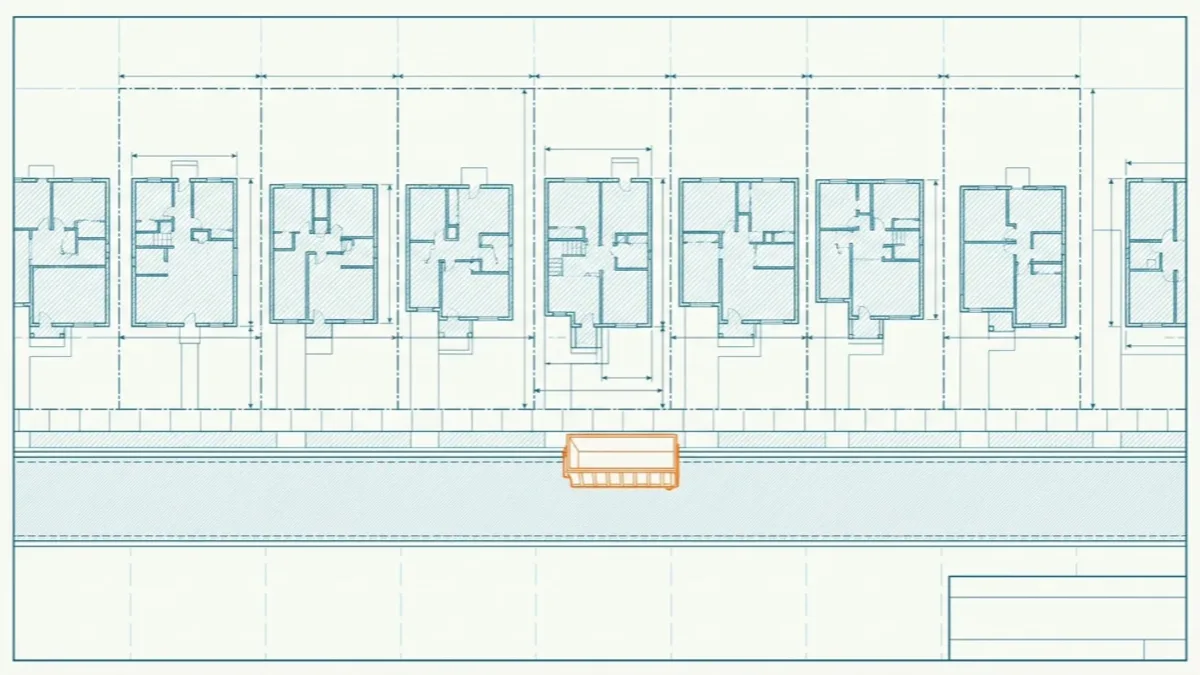
The short version
- In Toronto, a disposal bin placed on the roadway or in a public lane during a renovation needs a Street Occupation Permit. It is one of the City's right of way permits for City land, separate from your building permit.
- The trigger is the property line. The City says you need one if you plan to occupy the area beyond it: the boulevard, sidewalk, roadway or public lane.
- The same permit covers scaffolding, hoarding, moving containers, stored materials and lifts or hoists set up on City land.
- The fee for a bin is charged per day, from a table the City publishes on the permit page. Fees are subject to an annual inflationary increase. The City says permits must be obtained in person.
- It is separate from your building permit. A building permit application also brings its own Municipal Road Damage Deposit application.
Do you need a permit to put a bin on the street in Toronto?
Short answer: Yes, if it sits beyond your property line. Toronto's Street Occupation Permit page says you need one before a demolition, renovation or construction project if you plan to temporarily occupy the boulevard, sidewalk, roadway or public lane. A "disposal bin in roadway or public laneway" is first on its list.
The public right of way is, in the City's words, "the area beyond your property line." The permit page names four parts of it: the boulevard, sidewalk, roadway and public lane. The boulevard is the strip of grass or paving next to the sidewalk or curb. You may also see this permit called a street occupancy or road occupancy permit. On toronto.ca the name is Street Occupation Permit.
What does the permit cover?
The City's page lists what needs a Street Occupation Permit when it is placed beyond your property line. For a house renovation, the relevant items are:
- a disposal bin in the roadway or a public laneway,
- a disposal bin with a drop chute, which carries debris down into the bin,
- storage of materials and equipment,
- moving containers,
- scaffolding, plywood hoarding (a solid temporary fence around the site) or a covered walkway,
- a cherry picker, backhoe, forklift or scissor lift,
- a roof hoist, a concrete pump or a mobile crane or boom truck,
- ladders, ropes and swing stages (platforms hung from the roof for work on a wall),
- a temporary asphalt ramp into the site.
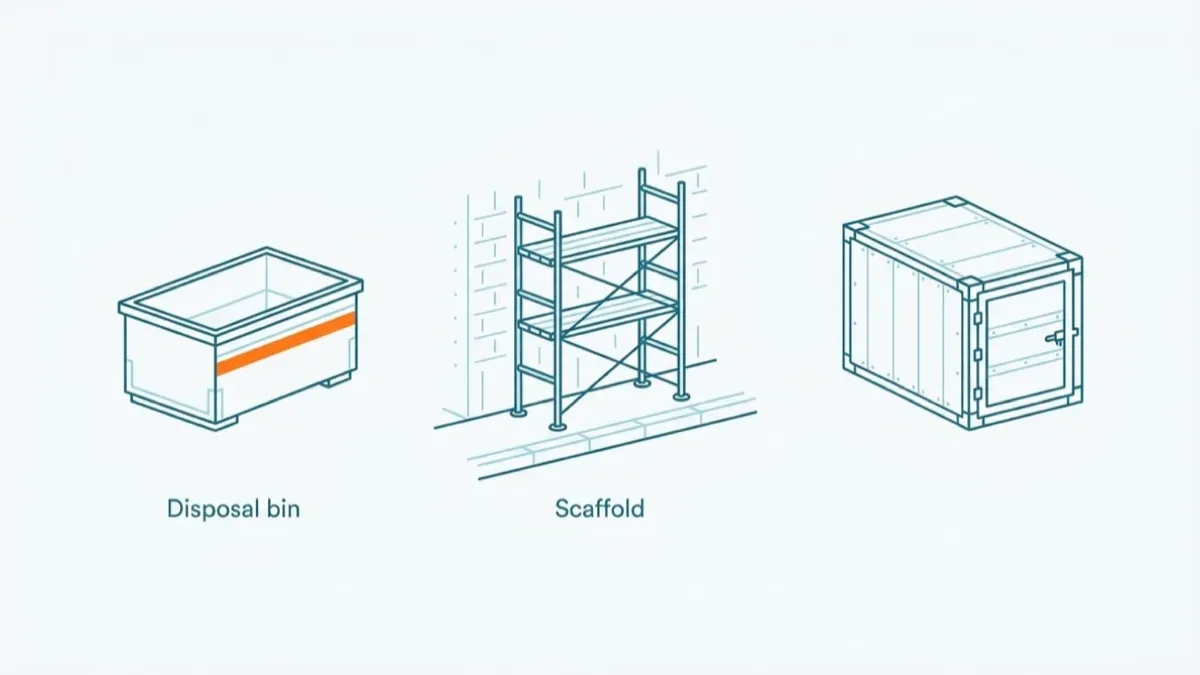
The City's construction requirements and guidelines page, written for people with a building permit, says the same thing in plain terms: "You will need a Street Occupation Permit before starting a demolition, renovation, or construction project if you are using an area beyond your property line (sidewalk, roadway or public lane)."
Where does your property end?
This is the question that decides whether you need the permit. The edge of the lawn is not always the edge of the lot.
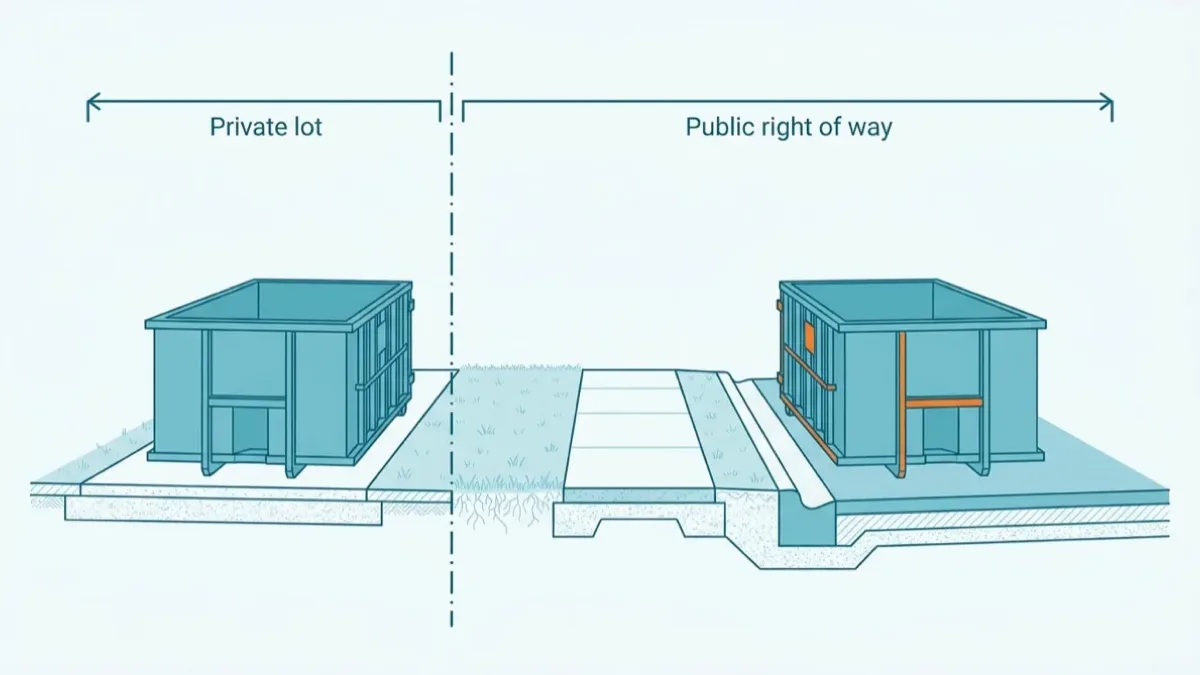
The City lists the boulevard with the sidewalk, roadway and public lane as the area beyond your property line. A property survey shows where your lot ends. If a bin will sit on the boulevard, even partly, plan on the permit.
How much does it cost?
The Street Occupation Permit page publishes a 2026 fee table. These figures are as published on September 22, 2026. Outside a Construction Hub, "equipment/materials" carry a permit fee of $73.89 plus HST per day. That group includes a disposal bin and a moving container. The same row adds $178.81 plus HST for each extra lane closed and $894.03 plus HST for a full lane closure.
Scaffolding and hoarding are priced differently. The table charges $818.19 plus HST per application, plus $27.66 plus HST per lineal metre (each metre of length) for the lifetime of the project. Taking over part of the sidewalk or boulevard inside an enclosure is $9.22 plus HST per square metre per month.
Construction Hubs are areas the City has designated because of dense construction activity. Permits issued inside a Hub are charged a fee 25 per cent higher than the standard rate. The same page adds that the Hub fees "will have no impact on the costs of permits for small-scale construction or renovation projects led by individual homeowners." It also says all fees are subject to an annual inflationary increase and "change without prior notice."
How do you apply?
The City's page sets out the process.
- Fill in the application form, linked from the permit page.
- Attach drawings. The City says drawings or a construction traffic management plan are required. They must be drawn to scale in metric and show the sidewalk, trees, poles, hydrants and parking spaces the setup affects.
- Explain any closure. If you need to close part of a street, sidewalk or lane, the City asks for a letter on how the space will be used, for how long and on what work schedule.
- Pick it up in person. The City says "Permits must be obtained in person and must be paid for when they are issued." It accepts cash, cheque, money order, debit, Visa, Mastercard and American Express.
For the office that serves your street, the City's construction guidelines say to call 311 or email 311@toronto.ca.
If you rent a bin, ask the company whether its quote includes the permit or whether you are expected to get it.
Is this part of your building permit?
No. Your building permit covers the work on your property. Our guide to applying for a building permit in Toronto covers that process. The Street Occupation Permit is one of the City's right of way construction permits, listed alongside the Construction Permit and the Oversize Load Permit.
The City's right of way construction permits page lists what else can apply to a renovation:
- a Construction Permit for work done on City land beyond your property line.
- a Municipal Road Damage Deposit. The City says "If you have requested a building permit, you are required to complete a Municipal Road Damage Deposit (MRDD) application as a guarantee against damage."
So a renovation that needs a building permit already brings one road-related form with it. A bin on the street adds at least one more. The Street Occupation Permit page also says a Road Disruption Activity Reporting System (RoDARS) application "is required when occupying expressways or any portion of the City's public right of way."
Which projects usually need one?
Any project where the bin, the scaffold or the equipment has to sit on City land. A demolition is the obvious case. A roof replacement can need a bin, and the City's list names a roof hoist separately. A kitchen or bathroom renovation can need a bin too. The street permit depends on where the bin sits, not on whether the work inside needs a building permit.
The City's guidelines add a neighbour rule that has nothing to do with the permit: "Do not litter your neighbours' property with garbage bins and debris." The same page tells builders not to block neighbours' driveways.
Can you look up a Street Occupation Permit?
PermitIndex's permit search, which requires signing in, is built from the City's open data on active building permits. It holds building permits only. It does not include Street Occupation Permits, so it cannot tell you whether a bin on your street is permitted.
Methodology and limits
This guide carries no permit statistics by design. Every rule and fee above comes from three City of Toronto pages, read on September 22, 2026. They are the Street Occupation Permit page (date modified July 21, 2026), which carries the 2026 fee table, the Right of Way Construction Permits page and the construction requirements and guidelines page. Each is linked where the article first draws on it in a section. Fees are quoted exactly as the City publishes them and will change.
Three limits apply. These are Toronto's rules; other Ontario municipalities run their own road permits. The City's pages are authoritative where they differ from this one. And the permit search linked above is PermitIndex's own product, built from the City's open building permit data; it does not include Street Occupation Permits. What that data covers, and the site's contact email, are on the data sources page.
Frequently asked questions
- Do you need a permit to put a dumpster on the street in Toronto?
- Yes, if the bin sits beyond your property line. The City's Street Occupation Permit page lists a disposal bin in the roadway or public laneway as one of the uses that needs the permit before a demolition, renovation or construction project starts. The City's construction guidelines say the same thing for dumpsters, construction bins and hoarding on the sidewalk, roadway or public lane.
- Do you need a permit for a bin on your own driveway in Toronto?
- The City's page describes the Street Occupation Permit as a permit for occupying the area beyond your property line, so a bin placed fully inside your lot is not on its list. Check where your lot ends on a property survey first. The City counts the boulevard, not only the sidewalk and road, as land beyond your property line.
- How much does a Street Occupation Permit cost in Toronto?
- The City publishes the current year's fee table on its Street Occupation Permit page. A disposal bin falls under equipment and materials, which is charged per day, and closing an extra lane or a full lane costs more. The City says all fees are subject to an annual inflationary increase and can change without notice.
- How do you apply for a Street Occupation Permit?
- The City's page links an application form and says drawings or a construction traffic management plan are required, drawn to scale in metric. The City says permits must be obtained in person and paid for when issued, and it accepts cash, cheque, money order, debit and major credit cards. For your local permit office, the City's construction guidelines point you to 311.
- Is a Street Occupation Permit the same as a building permit?
- No. A building permit covers the work on your property. A Street Occupation Permit is one of the City's right of way construction permits and covers your temporary use of the street, sidewalk or lane. A renovation can need both, and the City lists a third item, the Municipal Road Damage Deposit, for anyone who has requested a building permit.