Toronto permit data
Roof replacement in Toronto: permit rules and real costs
Published July 24, 2026
The short version
- Replacing existing roofing material with no structural work generally does not need a building permit in Toronto, so most shingle-for-shingle reroofs file nothing.
- A permit generally applies once the structure changes: reframing, raising the roof, adding dormers, or cutting large new openings.
- Published price guides put an asphalt reroof on a typical detached Toronto house in the low five figures; size, pitch, and access move the price more than the shingle brand.
- Roofing permits on record skew to the structural, high-value end of the market, so permit data overstates what an ordinary reroof costs and undercounts how much roofing happens.
Do you need a permit to replace a roof in Toronto?
Short answer: Generally no. The City of Toronto's guidance lists replacing existing roofing material, provided no structural work is required, among the projects that do not need a building permit. A permit generally comes into play when the roof structure changes: reframing, raising the roofline, adding dormers, or cutting large new openings. Confirm your specific project with Toronto Building.
That single exemption shapes everything about roofing costs in Toronto. It means the biggest line in a reroof budget is the roofing work itself, not City fees, and it means the permit record captures only a slice of the roofing market. This guide covers both sides: what the job costs, when a permit and its fee enter the picture, and what Toronto's own permit records can and cannot tell you about roofing prices.
When does roof work need a building permit?
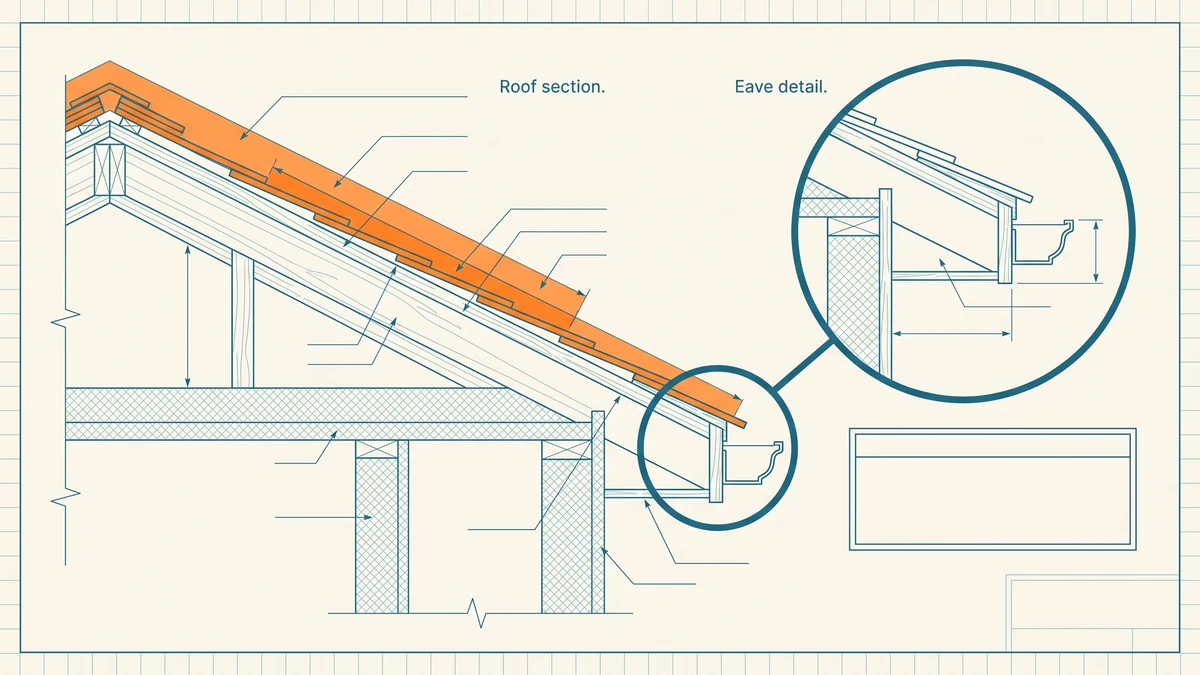
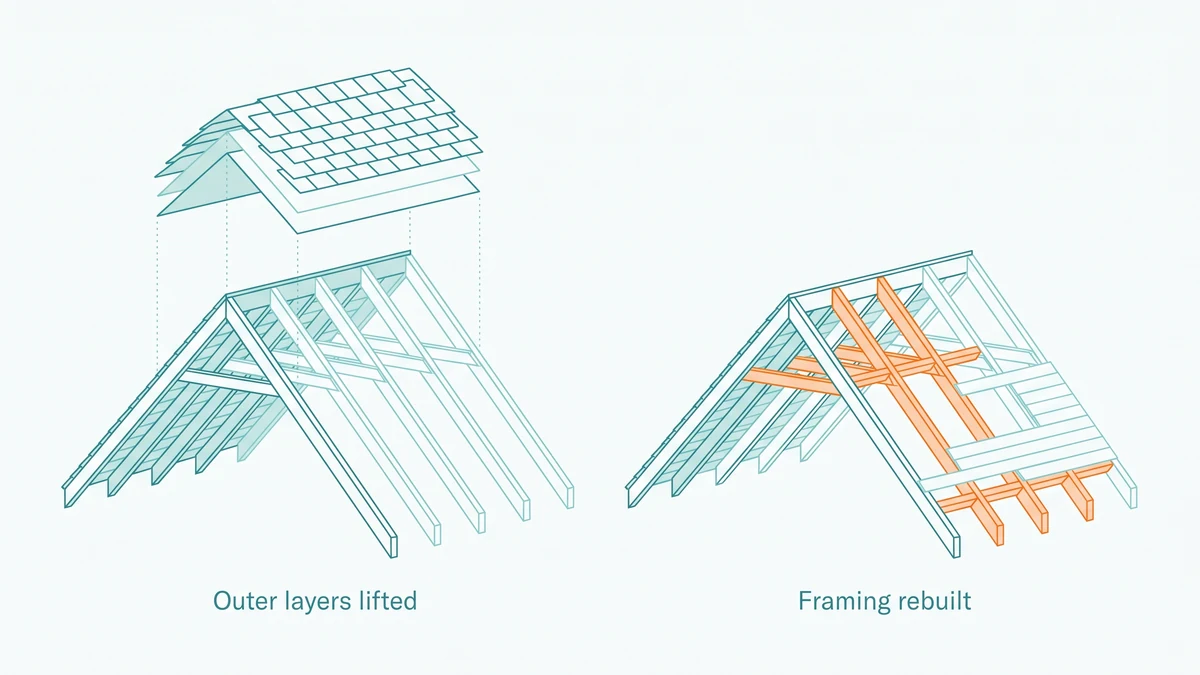
The dividing line is structure. Stripping shingles and laying new material on the same deck is treated as maintenance. Changing what holds the roof up is construction, and construction needs a permit.
Work that generally stays exempt:
- Replacing existing roofing material with no structural work, the straight shingle-for-shingle reroof.
- Installing a skylight in a house, where the installation removes no more than one rafter, joist, or similar member, and never a truss.
Work that generally requires a permit:
- Reframing or raising the roof, or converting attic space into living space.
- Adding dormers or cutting openings beyond the skylight exemption above.
- Switching to a substantially heavier roof system, where the structure must be checked for the new load.
- Green roofs and rooftop stormwater systems, which the City lists as permit-required work.
- Roof work that is part of an addition or a larger renovation, where it rides along on the project's permit.
Two edge cases deserve a call before you start. Rotten decking discovered mid-job sits in a grey zone between maintenance and structural work, and designated heritage properties can need heritage approval for visible exterior changes even when the roofing itself is exempt. The authoritative list lives on the City's when do I need a building permit page, and Toronto Building, not your roofer, makes the final call.
How much does a roof replacement cost in Toronto?
PermitIndex does not price roofs, and roofing prices are set by an open market rather than a City schedule, so the honest way to answer is to cite published estimates and date them. A Toronto roofing company's price guide, last reviewed in June 2026, lists architectural asphalt shingles at $5.80 to $7.80 per square foot installed and $8,800 to $16,500 for a typical detached home. A national renovation marketplace's guide, updated in April 2026, puts asphalt at $6 to $13 per square foot with standard projects at $10,000 to $18,000, and metal roofing far above that, at $15 to $30 per square foot.
Treat every one of those figures as a snapshot of someone's published estimate, not a quote. What actually moves your number is the roof, not the brochure: total area, pitch steep enough to need staging, how many old layers must come off, access for disposal, the count of valleys, chimneys, and vents to flash, and whether the decking underneath turns out to be sound. Material choice sets the floor, with entry-level shingles cheapest, architectural shingles the Toronto default, and metal or flat-roof membrane systems carrying their own price bands. Multiple written quotes against an identical scope beat any table on the internet, this one included.
What does the building permit itself cost for roof work?
For the majority of reroofs, nothing, because no permit is required. When roof work does need a permit, it is usually because the project is structural, and at that point the fee follows Toronto's standard formula: a published rate per square metre of floor area by building class, with a flat minimum fee for small jobs. A standalone structural roof job is typically small in floor-area terms, so it tends to land at or near the minimum fee, while roof work inside an addition or a major renovation is priced as part of that larger project's permit.
The current rates live on the City's building permit fees page, and our Toronto permit cost guide reproduces the published schedule with worked examples. The mechanics of the formula are covered in how Toronto calculates permit fees. The pattern is the same one that holds for furnace and AC work: the permit fee is a rounding error next to the trade work it authorizes. Budget attention should go to the roofing quote, the drawings if structure is involved, and the schedule, in that order.
What do Toronto's permit records show about roofing costs?
Toronto's permit record is the wrong place to look up the price of a shingle job, and knowing why is genuinely useful. Because a like-for-like reroof is generally exempt, it never enters the record. What does enter the record is the structural end of the market: reframes, dormers, roof work bundled into additions, and flat-roof and low-slope work on larger buildings.
Quotable: Toronto roofing permit data describes the structural end of the roofing market. A shingle-for-shingle reroof generally needs no permit, so it never appears in the record, while reframes, dormers, and flat-roof rebuilds do. Permit statistics therefore overstate the cost of an ordinary roof replacement and undercount how much roofing actually happens in the city.
The scale of the record makes the point concrete. PermitIndex indexes 30,910 Toronto building permits issued in the trailing twelve months as of Oct 9, 2026, drawn from the City's open data, and roofing is one of the trade categories we classify. You can browse the live Toronto roofing permits page to see where permitted roof work is concentrated, or search a specific address to see what has been filed on any property. If a seller tells you the roof was redone, an empty permit result is not a red flag by itself; for an ordinary reroof, no permit is exactly what you would expect.
How long does a permitted roof project wait for approval?
Approval time is a real cost on structural roof work, because a project that cannot start is scaffolding, financing, and season all on hold. The table below shows the observed lag from application to issuance among Toronto permits currently on record, by trade, over the trailing twelve months. These are observed issuance lags in the City's data, not a City service commitment.
| Trade | Permits (12mo) | Median wait | 90th percentile |
|---|---|---|---|
| Window / Door | 901 | 11 days | 61 days |
| Deck | 1,529 | 21 days | 119 days |
| Interior alteration | 4,532 | 24 days | 91 days |
| Roofing | 537 | 25 days | 124 days |
| Plumbing | 6,668 | 27 days | 232 days |
| Addition | 5,002 | 32 days | 166 days |
| Electrical | 95 | 32 days | 92 days |
| Pool | 172 | 32 days | 142 days |
| HVAC | 4,644 | 34 days | 191 days |
| Demolition | 1,633 | 43 days | 229 days |
| New build | 2,937 | 58 days | 521 days |
Groups with fewer than 30 permits are omitted; a median over a smaller sample is noise.
Read the roofing row for where structural roof work sits, and read the 90th percentile column as the planning number: one project in ten waits longer than that. The full breakdown, including waits by neighbourhood and postal area, is on the Toronto permit wait times page. If you are choosing a contractor for permitted work, our guide to roofing licences in Ontario covers who is allowed to do what.
How these numbers are calculated
The live figures on this page come from two named queries against the City of Toronto's open dataset of active building permits. The citywide permit count is computed by seo_citywide_12mo over permits issued in the trailing twelve months. The wait table is computed by seo_wait_by_trade, which takes the median and 90th percentile of days between application and issuance over the same trailing twelve-month window, drops records where the issue date precedes the application date, and reports no figure for any trade with fewer than thirty permits, because a median over a smaller sample is noise.
Two limitations frame everything here. First, the City publishes currently active permits, and records leave the dataset as projects close out, so these figures describe permits presently on record rather than a complete history, and they are Toronto-only. Second, because like-for-like reroofing is generally permit-exempt, the roofing category under-represents ordinary roof replacements and over-represents structural, higher-value work. The dollar ranges for market pricing are not PermitIndex data; they are contractors' published 2026 estimates, linked at the point of use and dated. Full sourcing is on the data sources page.
Frequently asked questions
- Do I need a permit to replace shingles on my house in Toronto?
- Generally no, if you are replacing the roofing material like for like and not touching the structure underneath. The City's guidance exempts replacing existing roofing material provided no structural work is required. If the job reframes, raises, or cuts into the roof structure, a permit generally applies, and Toronto Building makes the call for your specific project.
- Do skylights need a building permit in Toronto?
- Often not in a house. The City's guidance exempts installing a skylight in a house or small building when the installation removes no more than one rafter, joist, or similar structural member, and a truss can never be cut. Larger openings, or anything that alters a truss, push the job into permit territory, so confirm with Toronto Building before cutting.
- Why do roofing quotes in Toronto vary so much?
- Because the price is mostly labour and site conditions, not shingles. Steeper pitches, extra tear-off layers, tight access, chimneys and valleys, and the choice between entry-level and architectural material each move the total. Getting multiple written quotes against the same scope is the only reliable way to compare.
- Does the City inspect a reroof that needed no permit?
- No. City building inspections attach to permits, so exempt work proceeds without City inspection. That makes your contract and your contractor's warranty the main quality controls on an ordinary reroof, which is one reason to check references and written scope carefully.
- Is roof work different on a heritage property?
- It can be. On a designated heritage property, exterior alterations that are visible can require heritage approval in addition to any building permit, even where the roofing work itself would otherwise be exempt. Check with the City's heritage staff before committing to materials on a designated house.