Toronto permit data
Do You Need a Permit for a Pool in Ontario?
Published August 29, 2026 · Updated October 15, 2026
The short version
- Most Ontario pools get approval under a municipal pool enclosure bylaw, not the Building Code, so the permit you usually require is a pool enclosure permit, not a building permit.
- Municipal bylaws usually apply identical enclosure requirements to above-ground and in-ground pools. Most of them key on water depth, not construction type.
- A building permit may also cover the area around the pool: a raised deck, a pump house, or a cabana is evaluated separately.
- The Electrical Safety Authority in Ontario approves electrical work for a pool, not your local building department, so it does not appear in the municipal permit record.
- Toronto's permit record shows how long pool approvals take. The wait table on this page renders live from that record.
Do you need a permit for a pool in Ontario?
Short answer: Almost always, but generally not the permit most people assume. Ontario pools are usually controlled by a municipal pool enclosure bylaw, not the Building Code, so what you normally need is a pool enclosure permit from your municipality, not a building permit. Above-ground pools are usually covered by the same rules as in-ground pools because the bylaws look at water depth, not how the pool is built. A building permit may still be needed separately for a raised deck, a cabana, or a pump house. Confirm the requirements with Toronto Building or your local municipality.
People get confused by the pool question because it follows a separate rulebook from other backyard work. The Building Code and your local building department govern a deck or a shed. A pool is governed mainly by a safety bylaw that has its own permit, its own inspector, and its own limits. This guide explains which approval you need, how above-ground pools are handled, what other parts of the project may require a building permit, and how pool approvals appear in Toronto's actual permit record, which PermitIndex indexes daily.
Which permit does a pool actually need?
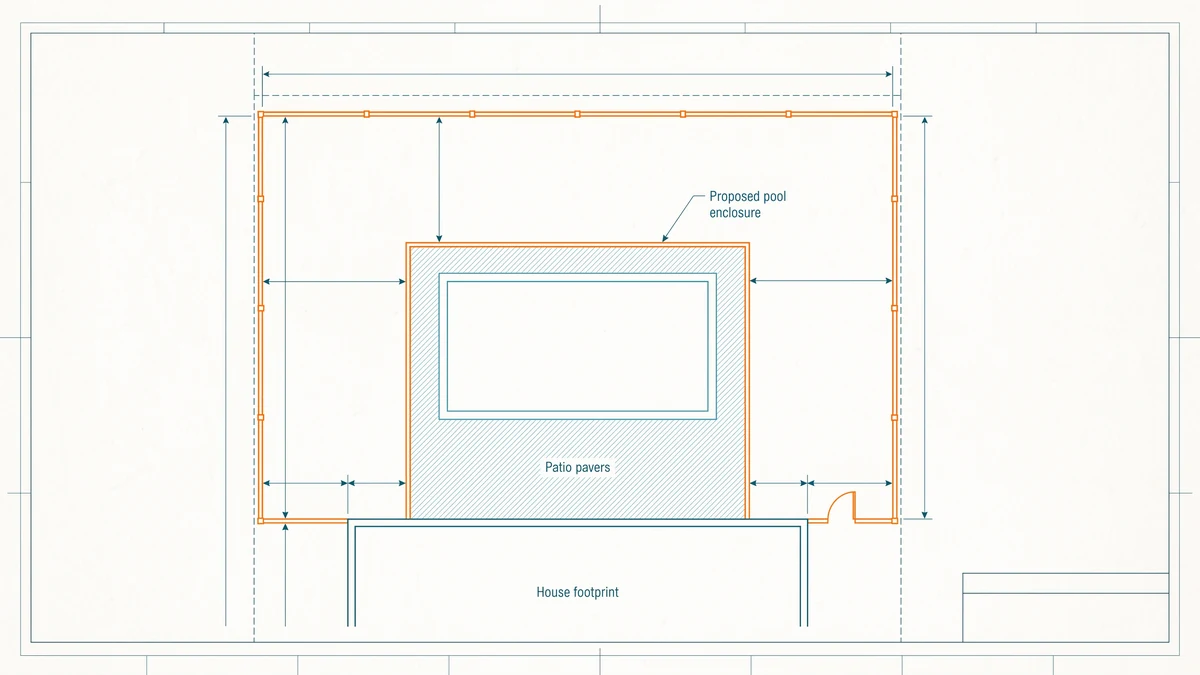
Ontario municipalities control residential pools mainly through pool enclosure bylaws passed under the Municipal Act, and Toronto runs one through its own pool enclosure requirements. The permit that bylaw grants governs the barrier around the water: the fence or wall, its height, the openings in it, and the gates with their self-closing and self-latching hardware. The rule prevents drowning, and it gets enforced that way.
That is why the usual permit instinct goes wrong in this case. The Building Code Act covers putting up and changing buildings, and a pool basin is not usually handled as a building the way a deck or an addition is. The outcome is two distinct approval paths that can both apply to a single backyard project.
Quotable: In Ontario, a pool permit is generally a safety permit rather than a building permit. It controls the enclosure around the water, not the pool itself, so a correctly permitted pool may leave almost no mark in a property's building permit records.
The practical consequence for anyone checking a property: do not read the absence of a pool from a building permit search as evidence the pool was never approved. It may have been permitted entirely under the enclosure bylaw. A permit search on an address shows what is in the building permit record, which is a different record from the enclosure one.
Do above-ground pools need a permit?
Generally yes. Ontario pool bylaws are usually framed around how much water a pool holds rather than how it is constructed, so an above-ground pool that holds water beyond the published depth limit is caught the same way an in-ground pool is. Inflatable and portable pools are the cases most often presumed to be exempt and most often are not, because the test is depth of water, not permanence.
Each municipality chooses its own threshold, and they do not agree on a single number, so this guide gives no figure. Get the number from your own municipality's bylaw page, since a pool that goes in against the wrong threshold is a pool you may have to drain. Toronto states its requirements in section 447-1.3 of its Municipal Code, linked above.
Two further points that catch above-ground installations specifically. The pool wall itself can sometimes count toward the enclosure where the bylaw allows it, but only if the ladder or steps can be secured or removed, and the details of that allowance vary. And a surrounding deck that gives access over the pool wall generally has to be treated as part of the barrier, which changes the design of both.
What parts of a pool project need a building permit?
The pool itself can fall outside the Building Code, yet the structures people put around it often do not. Judged one by one, each on its own terms:
- A raised deck or surround, assessed by the same height, attachment, and size rules as any other deck. See do I need a permit for a deck in Ontario.
- A cabana, pool house, or change room, which counts as a structure and is normally handled like one.
- A pump house or equipment enclosure, based on its size.
- Retaining walls holding back grade changes around the pool, which often have their own limit.
- Fences and gates, which also fall under fence bylaws and zoning rules for height and location. Fences, carports, and gazebos covers those.
Electrical work is the exception that deserves to be called out directly. In Ontario, the Electrical Safety Authority authorizes and inspects electrical installations instead of a municipal building department, so wiring for pool pumps and lighting follows the ESA notification process and never shows up in the municipal permit record. Pool plumbing usually runs through the plumbing permit stream instead, which plumbing permits in Ontario covers.
How long do pool permits take in Toronto?
When a pool build does create a city permit, the record shows the timeline. Every Toronto permit includes an application date and an issue date, and PermitIndex measures the actual gap between the two across all trades, for permits now in the database. The table below is drawn live from that data, trailing twelve months, Toronto only as of Oct 9, 2026. Locate the pools row and check the median next to the 90th percentile.
| Trade | Permits (12mo) | Median wait | 90th percentile |
|---|---|---|---|
| Window / Door | 901 | 11 days | 61 days |
| Deck | 1,529 | 21 days | 119 days |
| Interior alteration | 4,532 | 24 days | 91 days |
| Roofing | 537 | 25 days | 124 days |
| Plumbing | 6,668 | 27 days | 232 days |
| Addition | 5,002 | 32 days | 166 days |
| Electrical | 95 | 32 days | 92 days |
| Pool | 172 | 32 days | 142 days |
| HVAC | 4,644 | 34 days | 191 days |
| Demolition | 1,633 | 43 days | 229 days |
| New build | 2,937 | 58 days | 521 days |
Groups with fewer than 30 permits are omitted; a median over a smaller sample is noise.
Read this table with one caveat specific to pools, and it is the reason we state it rather than bury it. Pool permits are a smaller category in the record than trades like plumbing or roofing, and because much pool approval happens under the enclosure bylaw rather than the building permit stream, the record describes the pool-related work that came through as a building permit, not every pool installed in the city. These are observed issuance lags among permits currently on record, not a City service standard. To see what pool projects were actually permitted near you, browse live pool permits in Toronto, or compare every trade on the Toronto permit wait times page.
When should you start the approval process?
Begin before you accept an install date from a contractor. Demand for pools gets squeezed into a brief stretch each season, and the enclosure permit must already be issued before the pool is filled, not just submitted. If any piece of the job also requires a building permit, that request moves on a separate schedule and can trigger a zoning check when the cabana or deck comes close to a setback or lot coverage cap.
The least troublesome order is to settle the enclosure rules first, design the fence and any deck as one job instead of two, and file both approvals at the same time. Adding a code-compliant fence around a completed pool and a completed deck is the costly way to do this project, and it is the way most people do it. For the wider view of what calls for a building permit to begin with, begin with what requires a building permit in Ontario.
How these numbers are calculated
The wait-time table on this page is produced by the seo_wait_by_trade aggregate, which calculates a SQL median (percentile_cont(0.5)) and 90th percentile across the days from application to issuance for City of Toronto permits issued in the trailing twelve months. Records with an issue date earlier than the application date are removed, groups with under 30 permits get no row instead of a noisy figure, and the classifier's catch-all bucket is left out because it is unknown work, not a trade. The freshness stamp comes from seo_citywide_12mo, the newest issue date in the data, never the date you opened the page.
Three restrictions are in force here. The City lists only permits that remain open, so each number reflects permits currently in the system, not every permit ever issued, which is why the period is twelve months and no annual trend line shows up in this guide. The figures cover Toronto alone: the pool standards in this guide are local and differ across Ontario, but the data does not apply elsewhere. And the database we track is the building permit database, so pool permits granted under a city pool enclosure bylaw sit outside it. For the source dataset and its licence, go to the data sources page.
Frequently asked questions
- Do I need a permit for an above ground pool in Ontario?
- Typically yes, though usually you need a pool enclosure permit, not a building permit. Ontario municipal pool bylaws are mostly built around how deep the water can get rather than whether the pool is set into the ground, so an above-ground pool that holds water beyond the posted limit is treated the same as an in-ground pool. Check the limit with your municipality, since it is set locally.
- Is a pool permit the same as a building permit?
- Mostly not. Municipal pool enclosure bylaws typically govern pools, and that approval process sits apart from a building permit granted under the Building Code Act. The split matters when you check records: enclosure permits and building permits do not always follow the same tracking, so a pool that was correctly permitted under the bylaw might never appear in a property's building permit history.
- Do I need a permit for the deck around my pool?
- It may, and the assessment is separate from the pool. Decking is measured against the standard checks of height above grade, connection to the house, and size, so a raised pool deck can need a building permit even when the pool itself is covered completely by the enclosure bylaw. A ground-level surround is more apt to land inside the usual low-platform exemption.
- Do I need a permit to replace an existing pool?
- Treat a replacement as a new install. If you take out a pool and put in a different one, the enclosure rules apply to the final result, and an older pool built before current regulations does not transfer its standing to the new one. Check with your municipality before demolition, since filling in a pool can itself need notice or a permit.
- What happens if you install a pool without a permit in Ontario?
- Municipalities actively enforce pool enclosure bylaws, since these rules aim to stop drownings instead of overseeing how well a pool is built. Enforcement usually takes the form of an order to comply, and it may also demand that the pool be drained until an enclosure that meets the rules is installed. Insurance is the less visible risk: a claim can expose a pool that was built without a permit and does not comply.