Toronto permit data
Backwater Valve Permits and Subsidy in Toronto
Published October 14, 2026
The short version
- Toronto lists installing a backwater valve as work that needs a building permit. For a house with one or two units, it is a standalone drain permit, meaning one for drain work not tied to other construction. The City asks for no plans.
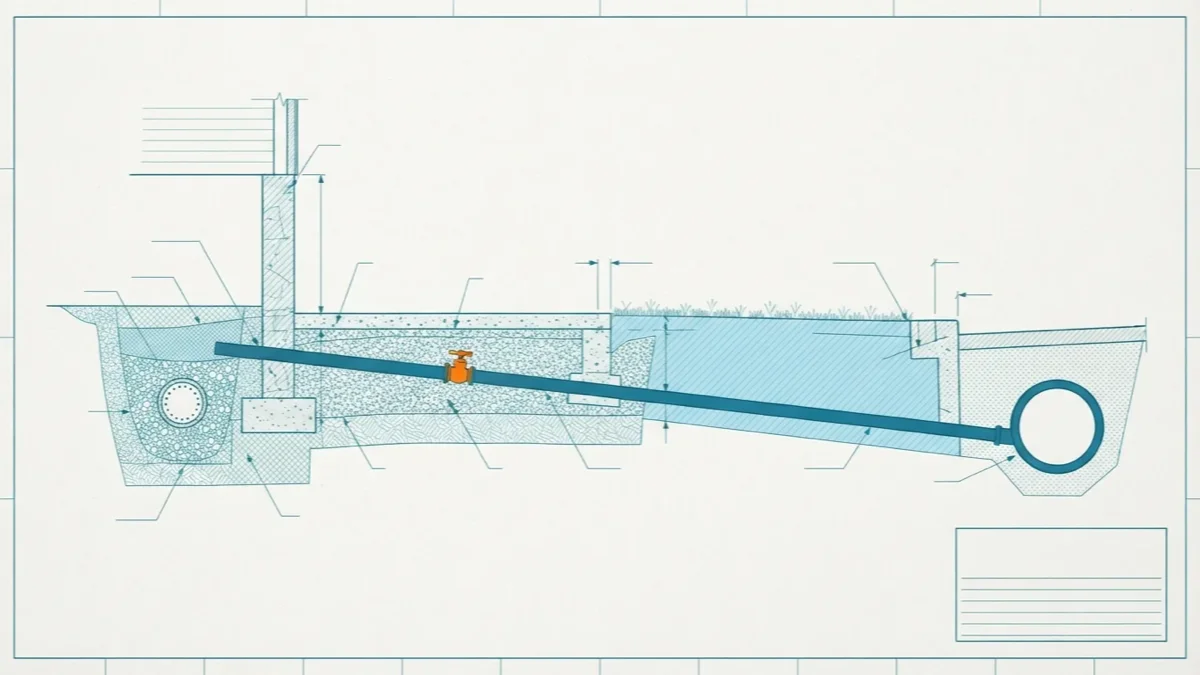
- A backwater valve is a one-way device in the main drain. The City says it closes the sewer line in heavy rain to keep water out of your home.
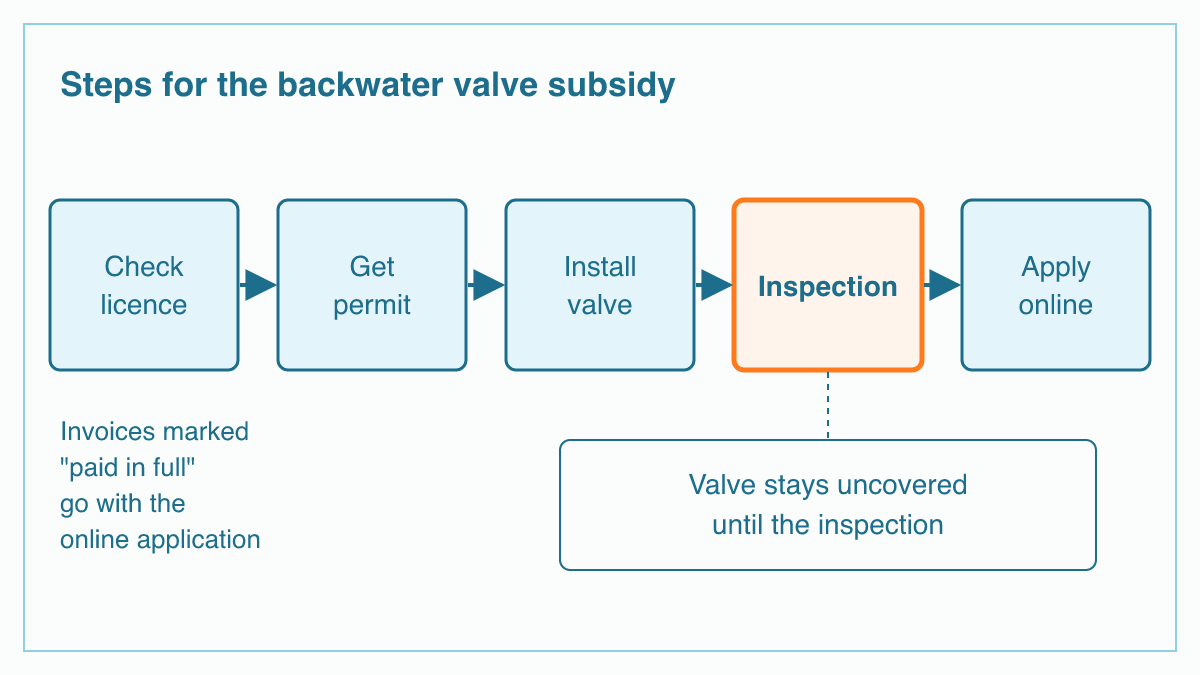
- The City's Basement Flooding Protection Subsidy Program pays part of the cost. Its steps run in a fixed order: licensed contractor, permit, inspection with the valve still uncovered, then the online application.
- The subsidy also has conditions, such as downspouts off the sewer (or a City exemption) and front-yard paving that meets zoning. For recent work, you apply within two years.
- A sump pump needs no building permit, the City says. The subsidy for one asks for photos instead.
Do you need a permit for a backwater valve in Toronto?
Short answer: Yes. The City's "When Do I Need a Building Permit?" page lists "Install a backwater valve" among projects that require one. For a house with one or two dwelling units, the City's backwater valve permit page calls it a "standalone drain permit" and says no plans are required. Standalone means the drain work is not tied to other construction.
A dwelling unit is a self-contained home, so a house with a basement apartment has two. Buildings with more units need plans as well, covered below.
The permit also matters for money. The City's flood protection subsidy builds the permit and its inspection into its steps, so the order matters.
What is a backwater valve?
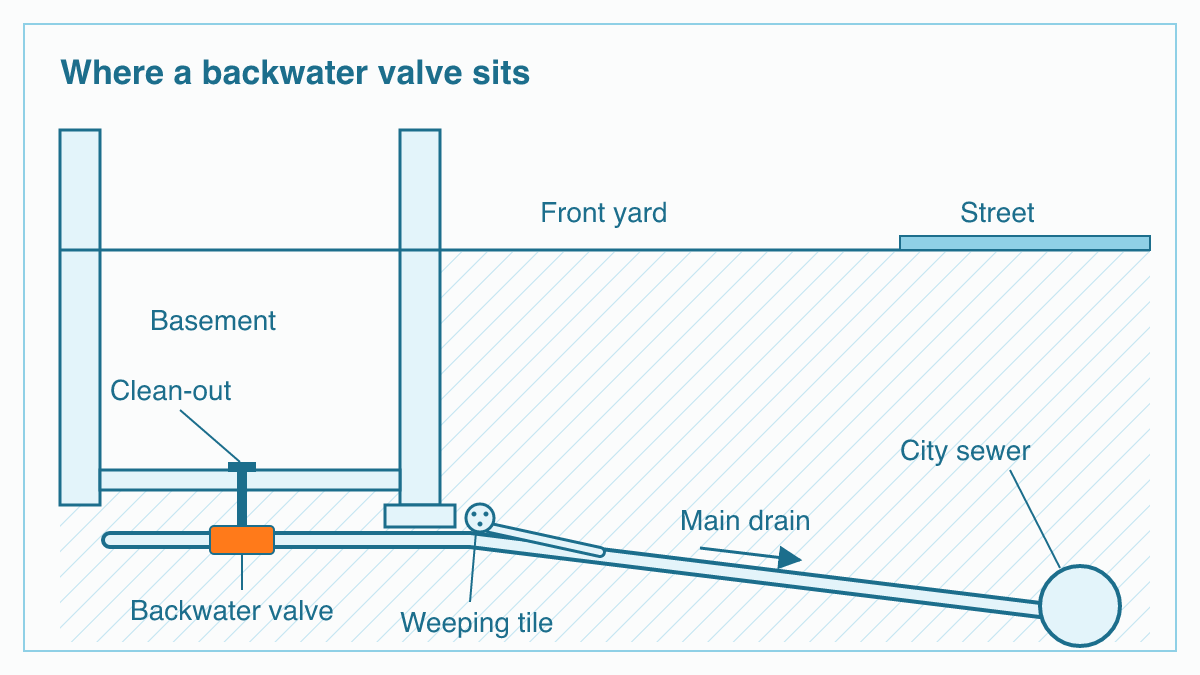
The City's subsidy program page says backwater valves "are designed to close the sewer line during periods of heavy rain to prevent water from entering your home." In plain words, it is a one-way device in the house's main drain. Water can leave, but water pushed back from an overloaded sewer cannot come in.
There is a catch in a storm. The same page says that when the valve is closed, "do not use any plumbing fixtures," because "water will not drain and will back-up into your home." It suggests an alarm "so that you know when the valve is closed."
The City's permit page limits the type. It allows "a fullport (normally open) backwater valve conforming to the appropriate CSA standard" in a building drain that serves only one occupancy. A building drain is the main drain pipe inside the house. Occupancy is the Building Code's word for how a building is used. Fullport means the opening is as wide as the pipe. CSA is the Canadian Standards Association. A valve "designed to be installed in a normally closed position is prohibited from being installed in a building drain or building sewer." A building sewer is the pipe outside the house that leads to the street sewer.
How do you apply, and what does it cost?
The City's backwater valve permit page says you "must now apply" through the Toronto Building Online Services Application Submission Tool. Toronto Building is the City division that handles building permits. The Application to Construct or Demolish is "required for all submissions." A Consent to Enter form "is required when installing a backwater valve and sump pump," so City staff can "verify the existence of a sump pump."
The Consent to Enter form itself is for owners applying to the subsidy program "for the installation of a backwater valve and sump pump." It is dated 2017 on its face.
For "multi-unit and non-residential buildings," the permit page points to the City's stand-alone plumbing and drain permit guide. That guide asks for a site or key plan and plumbing plans. Our guide to applying for a building permit in Toronto covers the wider process.
On fees, two City pages give two numbers. The permit page's table, effective January 1, 2026, lists backwater valves at "$38.67 each," as published. The building permit fees page states, as published: "Minimum fee of $214.79 (2026) shall be charged for all work." Neither page says which applies to a valve-only permit. Confirm the amount when you apply.
How does the Basement Flooding Protection Subsidy Program work?
The City's subsidy program page, date modified June 18, 2026, says owners of "a single-family, duplex, triplex or fourplex residential home can apply online." As of May 1, 2026, it says the City "is offering up to $6,650 in subsidies per property." The expanded amounts apply to work completed on or after November 12, 2025.
The page lists the eligible work and caps, as published:
- Backwater valves: "up to 80 per cent of the invoiced cost, to a maximum of $1,600 per device (maximum two devices)." This covers a new or replacement valve and an alarm.
- Sump pump and alarm: up to 80 per cent, "to a maximum of $2,250 (maximum one device)." A battery backup can add up to $300.
- Foundation drain severance and capping: up to 80 per cent, "to a maximum of $400." Foundation drains are the weeping tiles. The work cuts and seals their underground link to the City sewer.
- Home plumbing assessment: a one-time plumber's visit, up to 80 per cent, "up to a maximum of $500."
The page says "eligible costs include labour, materials and taxes." Each type of work has a lifetime maximum per property. And "disconnecting the downspouts from your property's eavestrough system is not eligible for a subsidy."
What conditions does the subsidy set?
The subsidy program page lists its conditions. In the City's words:
- "You must be the registered owner of a single-family residential, duplex, triplex or fourplex property within the City of Toronto."
- "The property must not have exceeded the lifetime maximum subsidy amount for each eligible installation or service."
- "The downspouts from the property's eavestrough must be disconnected from the City's sewer system or you must have been granted an exemption by the City."
- "All front yard paved areas of the property, including parking pads, must comply with the City's Zoning By-law requirements."
- "You must submit your application within two years of the installation of each flood protection device or service provided." For work completed before November 12, 2025, the window is one year.
- Your contractor and any sub-contractors "must have a valid business licence from the City of Toronto, at the time of installation or service."
- "You must provide the original electronic invoices from each licensed contractor and any sub-contractors."
- "You must not have any outstanding taxes or debts owed to the City of Toronto at the time your application is processed."
The page adds that "submitting an application does not guarantee a subsidy." Subsidies go out "first-come, first-serve" and depend on annual funding approved by City Council. To check the paving rule, see how to check a property's zoning.
What order do the subsidy steps follow?
The subsidy program page sets the order for a backwater valve.
- Check the licence. "Before work starts," verify your contractor's City business licence with the Business Licence Lookup tool or by phone.
- Get the permit. "Obtain a building permit to install a backwater valve."
- Book the inspection. "Request an inspection once installation is complete." See our guide to Toronto building inspections.
- Leave the valve visible. "Do not enclose or cover the valve before the inspection is complete." You must also consent to City access and to photos of the valve.
- Apply online with invoices. Each invoice must name the contractor and any sub-contractors, with addresses. It must show the property address, the date and an itemized cost, marked "paid in full."
The page warns that without a valid City licence, "you will be denied funding for the work completed." Its licence table marks the Plumbing Contractor (T94) and Plumbing and Heating Contractor (T92) licences for backwater valves. The Drain Contractor (T87) licence is marked too. The Building Renovator (T85) licence is marked only for sump pumps and pipe severance and capping; see our renovator licence guide. Payment "can take up to 10 weeks."
What about sump pumps and the foundation drain?
The City's permit page states: "A building permit is not required to install a sump pump." For the subsidy, the program page asks for photos of the pump and its discharge pipe outside. It says the pump should empty onto a permeable surface such as a lawn "at least two metres from the foundation wall."
Weeping tiles are the pipes around a foundation that collect groundwater. The City's flood prevention page says that if they connect to the sewer, "it is recommended that you disconnect it and install a sump pump and/or backwater valve." With a valve, the weeping tile, "if present, is connected downstream of the backwater valve." Downstream here means on the sewer side.
Severing and capping that connection is eligible for the subsidy. The City's pages read for this guide do not say whether it needs its own permit. Sewage ejector pumps, which pump waste up to the sewer, are a separate case. The flood prevention page says they "are not covered" by the subsidy program. Our underpinning guide covers other basement permit rules.
How does the City say to maintain a backwater valve?
The subsidy program page says to maintain and regularly inspect the valve "according to the manufacturer's directions." It says the same of sump pumps, and it suggests a battery backup because they "can lose power during severe storms."
The flood prevention page adds "annual cleaning of the backwater valve via the clean-out ports." A clean-out port is a capped opening into the drain. That page also says homeowners "are responsible for plumbing from the property line to inside the home." Neither page gives a cleaning method, so follow the maker's manual or ask your plumber. Our plumbing permit guide covers other drain work.
Where can you check a property's permit record?
PermitIndex's permit search, which requires signing in, is our own product. It is built from the City's open data on active building permits. It can show whether an active permit sits on an address. It cannot tell you whether a valve was installed or inspected. For past subsidies, the subsidy program page says owners can check a property's history at BasementFlooding@toronto.ca.
Methodology and limits
This guide carries no permit statistics by design. Every rule above comes from City of Toronto pages read on October 14, 2026. They are the subsidy program page (date modified June 18, 2026) and the backwater valve permit page (July 14, 2026). The list also takes in the "When Do I Need a Building Permit?" page (July 21, 2026) and the "How to Prevent Basement Flooding" page (April 17, 2026). The rest are the stand-alone plumbing and drain guide (August 18, 2026), the fees page (June 19, 2026) and the Consent to Enter form. Each is linked where it is used. "The page" without a new link means the page linked earlier in that section.
Three limits apply. These are Toronto's rules; other Ontario municipalities set their own, so check with yours. Subsidy amounts and fees change, and Council funds the program year by year, so the City's pages win where they differ from this one. And the permit search linked above is PermitIndex's own product, built from the City's open building permit data; it holds no subsidy records. What that data covers, and the site's contact email, are on the data sources page.
Frequently asked questions
- Do you need a permit to install a backwater valve in Toronto?
- Yes. The City's list of projects that require a building permit includes the line "Install a backwater valve." For a house with one or two dwelling units, the City calls it a standalone drain permit (one for drain work alone) and asks for no plans. You apply online through Toronto Building, the City's building permit division. Buildings with more units follow the City's stand-alone plumbing and drain permit guide instead.
- Can you get the City's subsidy for a backwater valve installed without a permit?
- The subsidy page's steps for a backwater valve start with "Obtain a building permit to install a backwater valve." They then require an inspection once the work is done, with the valve left uncovered until it is complete. The page does not describe any route to the backwater valve subsidy that skips the permit. If a valve is already in, ask the City before you apply.
- Who can install a backwater valve under the subsidy program?
- A contractor holding the right City of Toronto business licence at the time of the work. The subsidy page's licence table marks three contractor licences for backwater valves, all in the plumbing or drain trades. It warns that if your contractor does not have a valid City licence, you will be denied funding. Check the licence before work starts, using the City's lookup tool or by phone.
- Do you need a permit for a sump pump in Toronto?
- No building permit, according to the City. Its permit page states: "A building permit is not required to install a sump pump." A sump pump can still qualify for the City's basement flooding subsidy. For that, the subsidy page asks you to photograph the pump and the discharge pipe outside the house after installation, and to include the photos in your application.
- How do you maintain a backwater valve?
- The City says to follow the manufacturer's directions when you maintain and regularly inspect it. Its flood prevention page also lists annual cleaning of the valve through its clean-out ports, which are capped openings into the drain. Remember how the valve behaves in a storm. When it is closed, the City says not to use any plumbing fixtures, because the water will back up into your home.