Toronto permit data
Tree Removal Permits in Toronto
Published September 22, 2026
The short version
- On private property in Toronto, a tree 30 centimetres or more in diameter is protected. You need a City permit to injure or remove it. The diameter is measured 1.4 metres above the ground.
- A tree on a City street is protected at any size. So is any tree in a ravine or natural feature area on the City's protection map.
- A building permit does not replace the tree permit. The City says that if an as-of-right project affects a protected tree, you still have to apply.
- Construction can injure a tree without cutting it. Digging, storing materials and driving equipment over roots all count.
- New rules took effect on September 1, 2026. The 30 cm threshold still applies. Council has endorsed lowering it to 20 cm, pending further analysis in a report due in 2027.
Do you need a permit to remove a tree in Toronto?
Short answer: Often, yes. On private property, the City protects any tree 30 centimetres or more in diameter, measured 1.4 metres above the ground. Removing or injuring one needs a permit. Trees on City streets are protected at any size. So are all trees in ravine and natural feature areas. The rules are on the City's when to apply for a tree or ravine permit page.
The City's wording is broad. It says "any activity that can cause a tree of 30 centimetres or more in diameter, to be injured or removed, on private property, is prohibited unless authorized with a permit." The key word is "injured." The rule is not only about cutting a tree down.
Which trees are protected?
The City's when to apply page names the trees it protects.
- Private trees 30 cm or more. Size is measured as diameter at breast height (DBH). That is the trunk's width at 1.4 metres, or 4.5 feet, above the ground. If a tree has several stems and one of them is 30 cm or more, the City protects the whole tree.
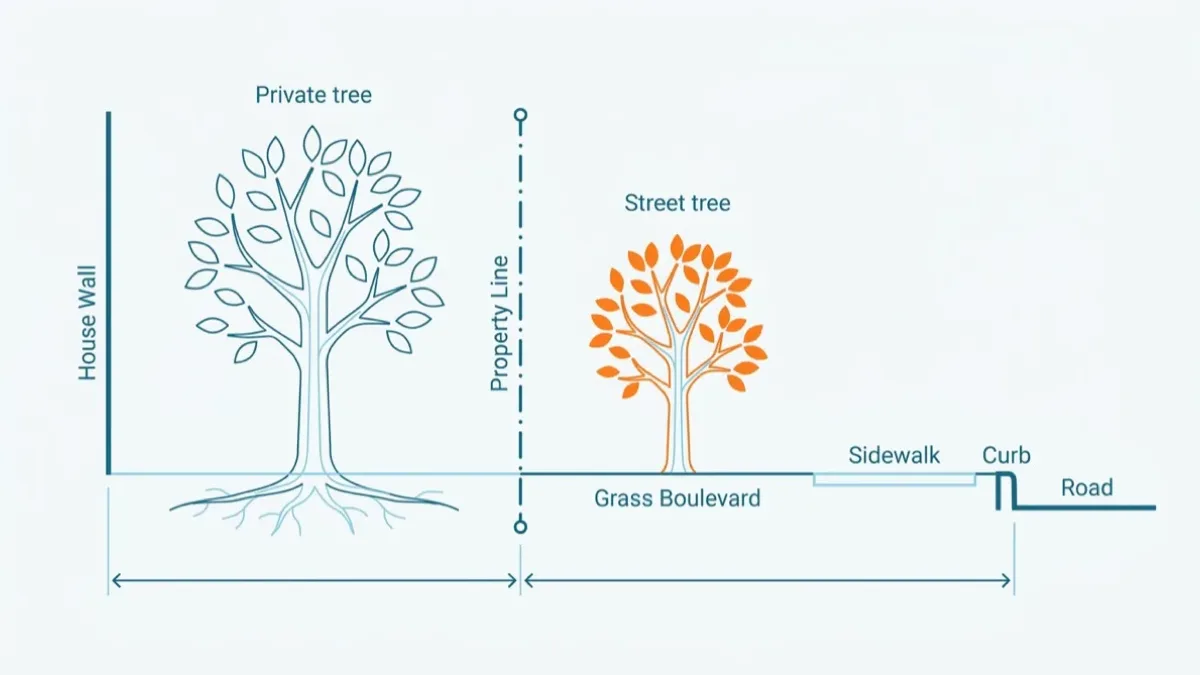
- Street trees, any size. City-owned trees can grow in the boulevard between the sidewalk and the road. The City says they can also stand "in a portion of a front yard next to the road or sidewalk." A property survey shows where your lot ends. If you have no survey, the City says 311 can confirm who owns the tree.
- Ravine and natural feature trees, any size. Any tree in an area covered by the Ravine and Natural Feature Protection By-law is protected. The City's page explains how to check an address on its online map.
- Park trees, any size. Trees in a City-owned or managed park are covered by the Parks By-law.
Another group was added on September 1, 2026. The City's Tree Bylaw Review page says trees planted because of an enforcement action or a development approval now need a permit for injury or removal "regardless of size."
How do you measure a tree's diameter?
You do not need special tools. The City's when to apply page gives the method step by step. Measure 1.4 metres up the trunk from the ground and mark the spot. Wrap a tape around the trunk at that height, at a right angle to the trunk. Then divide the distance around the trunk, in centimetres, by 3.14. The result is the diameter.
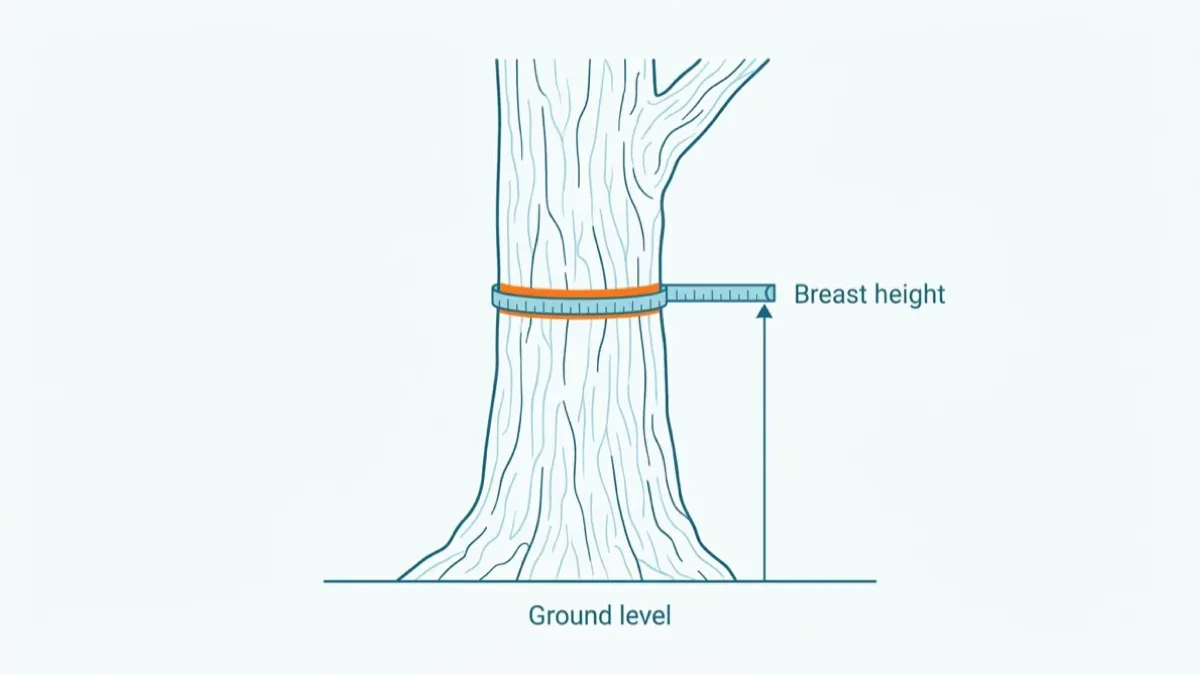
A tape reading of 100 cm around the trunk gives a diameter of about 31.8 cm. That tree is protected. A reading of 90 cm gives about 28.7 cm, so a private tree of that size is not, unless one of the other groups above applies.
Does a building permit cover the tree?
No. The City's when to apply page says: "If your as-of-right development impacts a protected tree, you are still required to apply for a permit to remove or injure it." As-of-right means work the zoning already allows. The City adds that it does not treat pools, landscape features, sheds, gazebos, cabanas, standalone garages or basements that extend beyond the building's above-ground footprint as as-of-right.
The same rule applies after a zoning variance. A minor variance is a small exception to the zoning by-law, approved by the City's Committee of Adjustment. The City's page says that if one is approved and your plan directly impacts a protected tree, "you are still required to apply for a permit." Our guide to building permits vs zoning approval explains how those two approvals differ.
For garden and laneway suites the City goes further. Its page says a suite "should not result in the removal of a healthy bylaw-protected tree," and that where a design needs one removed, the City may refuse the tree permit. If you are planning a suite, read our garden suite permit guide and talk to City staff about the tree early.
What counts as injuring a tree during construction?
A lot more than cutting. The City's when to apply page lists activities that can injure a tree or its protection zone. They include:
- building, demolishing or replacing structures, driveways, patios, decks, pools, sheds or retaining walls,
- excavating, trenching or changing the ground level,
- storing construction materials, equipment, soil or debris,
- driving vehicles and equipment over roots,
- nailing or stapling fences, wires or signs into a tree.
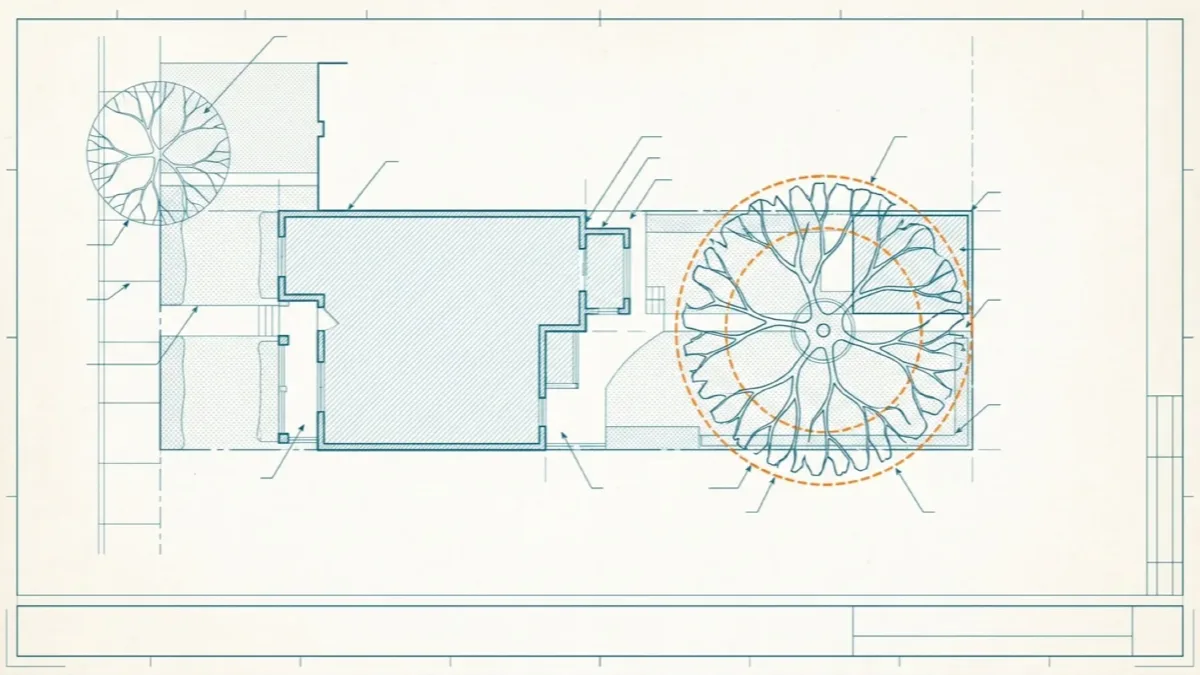
The City recommends consulting an arborist to measure the tree protection zone. That is the area around a tree that must be protected during construction work. The minimum size grows with the trunk. For a private tree 30 to 40 cm in diameter, the City's table sets the zone at 2.4 metres. If any work, including access or storage, will reach into that zone, the City says you need a permit. If it will not, you still have to protect nearby trees and prepare a Tree Protection Plan with an arborist.
This matters for smaller projects too. A detached garage, a deck or a pool near a large tree can all trigger a tree permit, even when the structure itself is simple.
Which reasons does the City accept?
Outside construction, the City's when to apply page names reasons it may accept for injuring or removing a tree. These include a tree in poor condition that cannot be kept safe, and a tree "causing or likely to cause structural damage to load-bearing structures or roof."
It also says a tree being a nuisance is generally not accepted as a reason. Clearing fallen leaves, fruit, twigs and small branches is, in the City's words, part of regular property maintenance. On roots, the City states that "tree roots do not cause lifts or cracks in properly-constructed and well-maintained infrastructure."
If your application is refused, the City says you will be told in writing and can appeal to Community Council, a committee of City councillors. The City adds that Community Council's decision "is final and cannot be appealed."
When is a full permit not needed?
The City's when to apply page lists a few cases.
- Pruning. No permit is needed to prune "in accordance with good arboricultural practices," meaning accepted tree-care standards that keep the tree healthy. Heavy cutting is different: the City lists excessive canopy removal and improper pruning as injury.
- Dead, hazardous or terminally diseased trees. The City says "a permit is not required to remove a tree that is 100 per cent dead." But it lists dead, imminently hazardous and terminally diseased trees as cases where "you must request and receive a permit exception confirmation from the City." That confirmation comes before removal, unless immediate work is needed to remove a danger. To ask for one, you send the tree's size, species, condition, photos and location to your local Tree Protection and Plan Review office by email, fax or in person.
What goes into a tree permit application?
The City's how to apply page, updated August 31, 2026, lists what a removal application needs:
- the application fee, paid by certified cheque or money order, with current fees listed on the form,
- an arborist report on the tree's species, size, condition and health,
- a replanting plan for a replacement tree,
- clear colour photos of the tree,
- for construction, a scaled site plan showing every tree of 30 cm or more on your lot and on neighbouring lots within 6 metres, plus elevations of the building and the depth of excavation.
The City states that incomplete applications will not be processed. Where a tree straddles a property line, the when to apply page says the other owners must consent.
What changed on September 1, 2026?
The City's Tree Bylaw Review page lists the changes that took effect that day. A new Distinctive Tree category applies to large, healthy private and ravine trees more than 61 cm in diameter that City staff identify. The City must consider that status when someone applies to injure or remove one. A stump 40 cm or more across can now be used as evidence when a removed tree's trunk cannot be measured. Replacement planting after a violation now starts at a 5:1 ratio and rises for larger trees.
One change has not happened yet. Council has endorsed lowering the private tree threshold from 30 cm to 20 cm, "pending further analysis and implementation strategy" in a report due in 2027. Until then, the City's how to apply page still names 30 cm.
Where do you ask about a specific tree?
PermitIndex's permit search, which requires signing in, is built from the City's open data on active building permits. It holds building permits only, not tree permits. If you are unsure whether a tree needs a permit, the City's how to apply page says to contact 311 or your local Tree Protection and Plan Review district office.
Methodology and limits
This guide carries no permit statistics by design. Every rule above comes from three City of Toronto pages, read on September 22, 2026. They are when to apply for a tree or ravine permit (date modified January 29, 2026), how to apply (date modified August 31, 2026) and the Tree Bylaw Review page. Each is linked in the section that draws on it. Where a paragraph says "the City's page" without a new link, it means the page linked earlier in that section. The diameter examples are arithmetic on the City's own formula.
Three limits apply. These are Toronto's tree rules; other Ontario municipalities write their own by-laws. The City is still changing these rules, with further reports due in 2027, so treat the City's pages as authoritative where they differ from this one. And the permit search linked above is PermitIndex's own product, built from the City's open building permit data; it does not hold tree permits. What that data covers, and the site's contact email, are on the data sources page.
Frequently asked questions
- Do you need a permit to remove a tree on your own property in Toronto?
- Yes, if the tree is 30 centimetres or more in diameter, measured 1.4 metres above the ground. The City's tree permit page says any activity that can cause a tree of that size on private property to be injured or removed is prohibited unless a permit authorizes it. Smaller private trees are not covered by that rule, unless they sit in a ravine protection area or were planted through an enforcement action or development approval.
- Do you need a permit to remove a dead tree in Toronto?
- Not a full permit, but you still need the City's sign-off first. The City's page says a permit is not required to remove a tree that is 100 per cent dead. It also lists dead trees among the cases where you must request and receive a permit exception confirmation before removal. A tree in poor condition is different: the City says a permit is still required.
- Does a building permit let you remove a tree in the way of construction?
- No. The City's page says that if your as-of-right development impacts a protected tree, you are still required to apply for a permit to remove or injure it. The same is true after a minor variance is approved by the Committee of Adjustment. The tree permit is a separate application, and the City may ask you to change your design to protect the tree.
- Can you prune a protected tree without a permit?
- Yes, within limits. The City says a permit is not required to prune a tree as long as the work follows good arboricultural practice to keep the tree healthy. The City lists excessive canopy removal and improper pruning among the activities that injure trees, so heavy cutting can still need a permit.
- What if the tree is on the property line or on the neighbour's side?
- A tree whose trunk crosses a property line is a boundary tree, owned by all the owners it touches. Any of them may apply, but the City requires consent from the others. If the trunk is fully on the neighbour's lot but the crown or roots reach your property, the City calls it a neighbour tree and you may apply. The City adds that a permit does not decide who owns a tree.