Toronto permit data
Roofing Permit Activity in Toronto: What the Record Shows
Published July 24, 2026
The short version
- Permitted roofing work is a small slice of Toronto's building permit record, because a like-for-like reroof generally needs no permit at all.
- What the record does capture is the structural end of the roofing market: reframing, deck replacement, dormers, and flat-roof rebuilds.
- Roofing sits toward the faster end of Toronto's approval table, but its tail is long, so the 90th percentile is the planning number.
- Declared values on roofing permits sit far above the price of an ordinary reroof, precisely because only the heavy projects need a permit.
How much roofing activity shows up in Toronto's permit record?
Answer first: A thin but revealing slice. Toronto issued 30,910 building permits in the trailing twelve months as of Oct 9, 2026, and roofing accounts for a few hundred of them. That is not because Toronto's roofs are quiet. It is because an ordinary like-for-like reroof generally needs no permit, so the record captures the structural end of the market and nothing else.
The permit record is therefore a strange instrument for roofing: it misses most of the market and measures the interesting part. Every reframe, dormer, flat-roof rebuild, and load-changing material switch that files a permit lands in the City's open dataset, and we classify it into the roofing trade. The daily count, and the neighbourhoods where that work concentrates, are on the live Toronto roofing permits page. This report explains what those numbers mean and where they mislead if you read them naively.
Quotable: Toronto's permit record undercounts roofing activity and overstates its cost, both for the same reason: the everyday reroof is generally permit-exempt, so only structural roof projects ever enter the data.
What counts as a roofing permit in this data?
Roofing trade: a classification PermitIndex derives from the work description on each permit in the City of Toronto's active building permits dataset. It is our label, not a City field, and it aims to capture permits whose primary scope is roof structure and covering work.
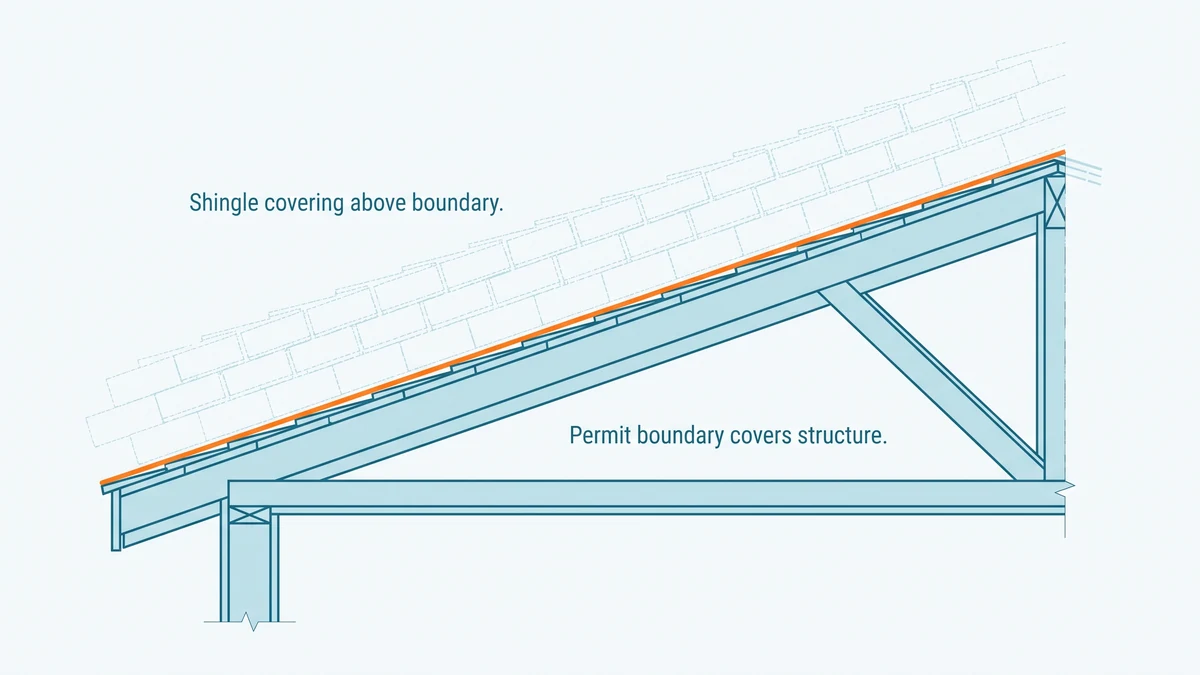
Two boundaries matter when you read it. First, permits our classifier cannot match to any trade go into a catch-all bucket that means unknown, and we never chart or count that bucket as if it were a real trade. Second, the trigger for a roofing permit in the first place is structural change. Replacing shingles with the same covering over the same structure generally requires no permit in Ontario, while altering framing, sheathing, slope, or moving to a much heavier material generally does. That line is drawn by the Ontario Building Code and administered by Toronto Building, so confirm any specific project there rather than relying on a summary. Our guide to roof replacement permit rules and costs walks through the homeowner side of that question.
How long does a roofing permit take to be issued in Toronto?
Roofing currently sits toward the faster end of the approval table, which fits the cross-sectional pattern across all trades: replacement-scope work clears quickly and ground-up structural work waits longest. The table below shows the observed lag from application to issuance for every trade with a reportable sample, over the trailing twelve months as of Oct 9, 2026. Read the roofing row for the current figures.
| Trade | Permits (12mo) | Median wait | 90th percentile |
|---|---|---|---|
| Window / Door | 901 | 11 days | 61 days |
| Deck | 1,529 | 21 days | 119 days |
| Interior alteration | 4,532 | 24 days | 91 days |
| Roofing | 537 | 25 days | 124 days |
| Plumbing | 6,668 | 27 days | 232 days |
| Addition | 5,002 | 32 days | 166 days |
| Electrical | 95 | 32 days | 92 days |
| Pool | 172 | 32 days | 142 days |
| HVAC | 4,644 | 34 days | 191 days |
| Demolition | 1,633 | 43 days | 229 days |
| New build | 2,937 | 58 days | 521 days |
Groups with fewer than 30 permits are omitted; a median over a smaller sample is noise.
The column to plan around is the 90th percentile. Roofing's tail runs several times its median, which is the signature of a mixed queue: simple structural jobs clear fast, while projects that trigger revisions or zoning questions wait much longer. If your roof project is attached to a larger renovation, expect it to behave like the larger renovation. The full breakdown by neighbourhood and postal area is on the Toronto permit wait times page, and these figures describe issuance lag among permits already on record, not a service standard the City commits to.
How much construction value do roofing permits carry?
More than the size of the trade suggests, because the permit-triggering projects are the heavy ones. In the research snapshot we logged on 2026-07-17, the newest issue date in the public record at the time, the roofing trade held 474 permits issued over the trailing twelve months. Of those, 340 disclosed a construction value, and that disclosing subset totalled roughly $167 million, with a median declared value near $61,000. The permits that disclosed no value make the true total higher, and every dollar figure above describes only the disclosing subset. Those numbers were correct on that date and will have drifted since; the live pages carry the current record.
Read the median, not the total, as the story. A declared value in the tens of thousands of dollars describes structural roof work bundled with real construction, not a shingle quote. Anyone using permit data to estimate what a normal Toronto reroof costs will overshoot badly, because the normal reroof is the one job that never files. The biggest single projects in the dataset, roofing included, are ranked on the largest Toronto projects page.
Where can you see the current roofing numbers?
Three live surfaces carry the up-to-date figures this article deliberately does not freeze. The Toronto roofing permits page holds the daily count and the neighbourhood ranking, which is where the territory story lives: permitted roof work clusters where the housing stock is old enough to need structural intervention. The permit search answers the address-level question, showing what has been filed on any specific property with no login. And the sibling reports in this series, starting with the June 2026 permit trends report and HVAC permit activity, put the roofing slice next to the rest of the city's construction record. For who is allowed to pull a roofing permit at all, see our guide to roofing licences in Ontario.
How these numbers are calculated
The live figures on this page come from two named queries against the City of Toronto's open dataset of active building permits. The citywide permit count is computed by seo_citywide_12mo over permits issued in the trailing twelve months, and its as-of stamp is the newest issue date in that data. The wait table is computed by seo_wait_by_trade, which takes the median and 90th percentile of days between application and issuance over the same window, drops records where the issue date precedes the application date, and returns no row for any trade with fewer than thirty permits, because a median over a smaller sample is noise.
The dollar figures in the value section are the one deliberate exception to our live-rendering rule. No published aggregate currently computes trade-level value totals, so we ran a logged read-only query over the public view on 2026-07-24, covering permits issued through 2026-07-17, and froze the result with its date stated in the sentence. Roughly forty-five percent of Toronto permits disclose no construction value citywide, so every dollar total here describes only the disclosing subset and understates the whole.
One limitation frames everything: the City publishes currently active permits, and records leave the dataset as projects close out. These figures describe permits presently on record in Toronto, not a complete history, which is why we restrict every window to the trailing twelve months and never publish year-to-year comparisons. Roofing carries a second bias of its own, because exempt like-for-like reroofs never enter the record at all. Full sourcing is on the data sources page.
Frequently asked questions
- Do I need a permit to replace my roof in Toronto?
- Generally not for a like-for-like replacement, such as new shingles over the same structure. A permit generally comes into play when the work is structural: changing the framing, the deck, the slope, or moving to a much heavier roofing material. Rules have exceptions, so confirm your specific project with Toronto Building before you start.
- Why do so few roofing jobs appear in the permit record?
- Because the most common roofing job, a straight replacement of the covering, is generally exempt from a building permit in Ontario. Exempt work never enters the record, so the permit data captures structural roof projects rather than the everyday reroof market. That makes the record a measure of heavy roof work, not of roofing overall.
- Is permit data a complete measure of Toronto's roofing market?
- No, and we say so plainly. It undercounts total roofing activity because exempt replacements are invisible to it, and it overstates the cost of a typical roof job because only larger structural projects file. Read it as a window into the structural end of the market, which no other public source measures at all.
- Can this data tell me which roofing company did the work?
- No. The public record describes the work, the address, and the status, and it names no contractor, owner, or applicant. PermitIndex publishes territory intelligence about where permitted work is happening, not leads or company rankings.
- How fresh are the roofing figures on this page?
- The statistics here render live from our database, which re-ingests the City of Toronto's open permit data every day. Each figure carries its own as-of stamp drawn from the newest issue date in the data, so what you see reflects the current state of the record rather than the day this article was written.