Toronto permit data
HVAC Permit Activity in Toronto: Where the Work Is
Published July 24, 2026
The short version
- HVAC is one of the largest classified trades in Toronto's permit record, and the work spreads across the whole city rather than clustering in a few construction hot zones.
- A typical HVAC permit clears review close to the citywide middle, but the trade carries one of the longer slow tails in the record, so a minority of mechanical files wait far longer.
- Every count and wait time on this page renders live from the City of Toronto's open permit data and moves as the record does.
- Permit counts understate total HVAC activity: like-for-like equipment swaps are often handled under gas and electrical safety regimes rather than a building permit.
How much HVAC permit activity is on record in Toronto?
Short answer: Toronto has 30,995 building permits issued in the trailing twelve months and currently on record as of Oct 9, 2026. HVAC is one of the largest classified trades in that mix by permit count, and the table below renders its live volume and approval wait next to every other trade the record can name.
Nobody else publishes this number. Statistics Canada reports permit values by broad category, and the City publishes the raw dataset, but no public page breaks Toronto's permit record down to mechanical work and keeps it current. PermitIndex computes it directly from the City's open data, which refreshes daily, so what you see here is the record as it stands rather than a snapshot from whenever an analyst last exported a spreadsheet.
HVAC permit, in this report, means a building permit whose recorded scope is heating, ventilation, or air conditioning work: new systems, boiler and furnace installations that need a permit, ductwork changes, and mechanical work filed alongside bigger renovations. The trade label is ours, derived by classification rules applied to the City's permit descriptions, because the source data does not sort itself by trade.
How do HVAC permit waits compare with other Toronto trades?
In the middle for the typical file, with one of the longer slow tails in the record. Across all trades, half of Toronto permits issued in the trailing twelve months came through within 29 days of application, and one in ten waited longer than 177 days as of Oct 9, 2026. Here is where HVAC sits in that range, live from the record:
| Trade | Median wait | 90th percentile | Permits, trailing twelve months |
|---|---|---|---|
| Window / Door | 11 days | 61 days | 905 |
| Deck | 21 days | 119 days | 1,533 |
| Interior alteration | 24 days | 91 days | 4,540 |
| Roofing | 25 days | 123 days | 540 |
| Plumbing | 27 days | 232 days | 6,685 |
| Pool | 31 days | 141 days | 173 |
| Addition | 32 days | 166 days | 5,021 |
| Electrical | 32 days | 92 days | 95 |
| HVAC | 34 days | 192 days | 4,654 |
| Demolition | 43 days | 229 days | 1,640 |
| New build | 58 days | 520 days | 2,945 |
Groups with fewer than 30 permits are omitted; a median over a smaller sample is noise.
Quotable: In Toronto's permit record, HVAC is a high-volume trade with a split personality: the typical mechanical permit clears review near the citywide median, while the slowest tenth of HVAC files waits several times longer than that, one of the longer slow tails among the classified trades.
These are observed issuance lags among permits currently on record, not a City service standard. Read both columns for HVAC. The median tells you what a straightforward mechanical file experiences, and it sits nowhere near the structural trades at the slow end of the table. The ninetieth percentile tells you about the tail, and HVAC's tail is heavy, plausibly because mechanical scopes often ride inside larger, slower projects rather than travelling alone. The exact day counts drift as the record refreshes; the two-sided pattern is the durable part. The full breakdown by trade and by area lives on the Toronto permit wait times page.
Where in Toronto is the HVAC work happening?
Almost everywhere, which is itself the finding. In the current record, HVAC permits appear across essentially all of Toronto's 158 neighbourhoods, and even the busiest single area holds only a small share of the citywide total. The one consistent leader is the downtown Yonge-Bay corridor, where towers and institutional buildings replace and upgrade mechanical systems constantly, and the areas behind it jump across the map: the current runners-up sit in the west end and in North York, not next door to the leader.
For anyone reading this as a market signal, that spread matters more than any single hot spot. Mechanical work tracks the existing building stock, because everything already built eventually needs its heating and cooling touched, so HVAC demand in Toronto is a building-age story more than a development story. You can see the live picture, ranked by neighbourhood, on the HVAC permits in Toronto page, and the contrast with the trades that do cluster around development pressure is covered in our report on construction hot zones by neighbourhood. To check what mechanical work is on record at a specific property, search the address directly.
What does the permit record miss about HVAC activity?
A lot, and it is worth stating plainly because it changes how the counts should be read. In Ontario, the gas side of a furnace swap runs through TSSA-registered contractors and the electrical side through the Electrical Safety Authority, both separate from the municipal building permit system. A straight like-for-like equipment replacement often generates no building permit at all. Toronto requires a stand-alone mechanical permit when HVAC work proceeds independently of other construction, and the City's guide is the authority on which projects that covers.
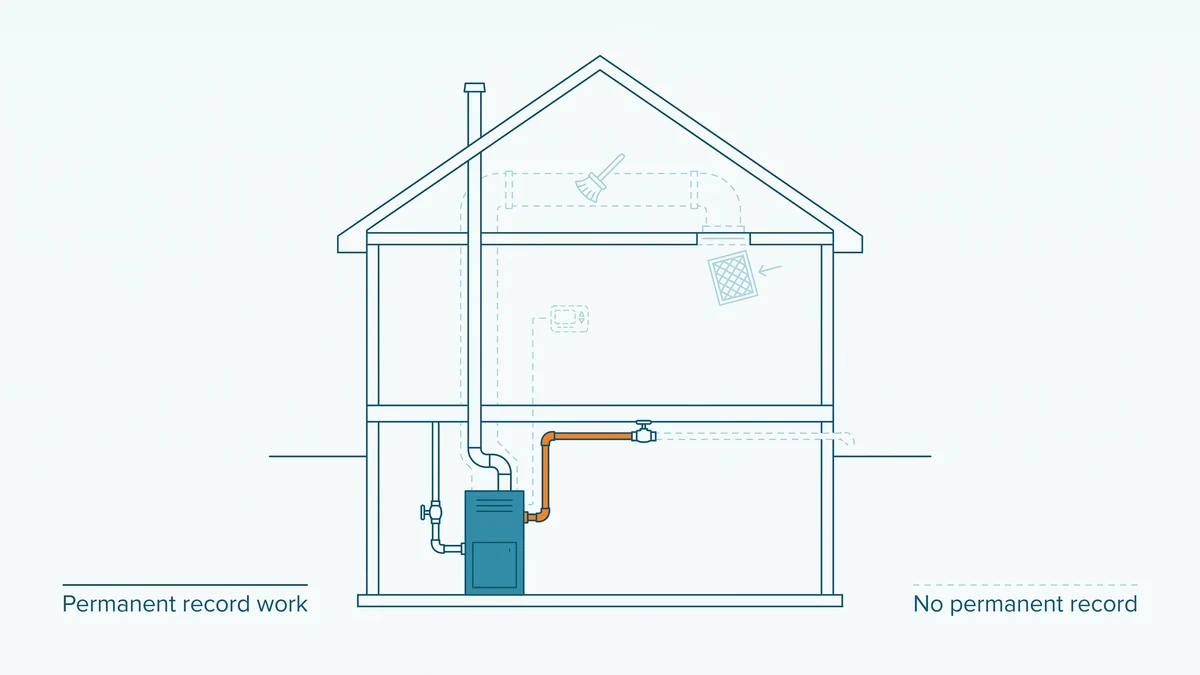
So the permit record is a floor on HVAC activity, not a census of it. What it captures well is the permit-worthy end of the market: new systems, ductwork changes, and mechanical scopes inside larger renovations. That slice is still the best public signal of where serious mechanical work is happening in Toronto, and it is a slice nobody else measures. What a furnace permit costs, and when one is needed at all, are separate questions with their own guides: HVAC permit cost in Toronto and furnace and AC replacement permits in Ontario. For the month-by-month picture across all trades, see the permit trends report for June 2026; for another single-trade cut of the record, the companion report on roofing permit activity.
How these numbers are calculated
Every statistic on this page renders live from the City of Toronto's open dataset of active building permits, scoped to Toronto only. The citywide permit count comes from the seo_citywide_12mo function, and the wait figures from seo_wait_citywide and seo_wait_by_trade, which compute the median and ninetieth percentile in SQL over permits issued in the trailing twelve months, drop records where the issue date precedes the application date, and report a trade only when it holds at least thirty permits. We publish medians, never averages, because a small number of very long files would drag an average far above what a typical applicant experiences. The trade classification is derived by PermitIndex from the City's permit descriptions; permits matching no rule are left unclassified and excluded from the trade table rather than being charted as a category.
The geographic observations above come from the seo_trade_nbhd_counts aggregate, the same function that powers the live neighbourhood ranking on the HVAC trade page, reviewed on 2026-07-24: it counts HVAC permits per neighbourhood over the trailing twelve months. We describe the shape of that distribution rather than the day's exact figures because the record reshuffles daily. One limitation bounds everything here: the City publishes currently active permits, and records leave the dataset as projects close out, so these figures describe permits presently on record, not a historical census, and no year-to-year comparison is honest with this source. For the underlying dataset and its licence, see the data sources page.
Frequently asked questions
- Do I need a building permit to replace a furnace or air conditioner in Toronto?
- Often not for a straight like-for-like swap, because the gas and electrical sides of the job are regulated separately from the building permit system. A permit generally comes into play when ductwork changes, a new system goes in, or the mechanical work is part of a larger renovation. Confirm your specific project with Toronto Building before starting.
- What shows up as an HVAC permit in PermitIndex data?
- Permits whose recorded scope is heating, ventilation, or air conditioning work, classified by rules PermitIndex applies to the City's permit descriptions. That includes stand-alone mechanical permits and mechanical work filed alongside larger projects. Permits that match no trade rule stay unclassified rather than being forced into a category.
- Can I see which contractor pulled an HVAC permit in Toronto?
- No. The City's open dataset does not publish reliable contractor identities, and PermitIndex does not publish any personal or company names. The record describes the work, the address, and the status, which makes it territory intelligence rather than a lead list.
- How often is the HVAC permit data updated?
- PermitIndex re-ingests the City of Toronto's active-permits dataset daily, so counts and wait times move as the City's own record moves. Every figure carries an as-of stamp drawn from the newest issue date in the data, not from the page's publish date.
- Why would an HVAC job not appear in the permit record at all?
- Two common reasons. The job may not have needed a building permit, as with many straight equipment replacements, or the permit may have closed and left the City's active-permits dataset. An empty result means nothing is currently on the active record, not that no work was ever done.