Toronto permit data
Driveway Widening Permits in Toronto
Published October 14, 2026
The short version
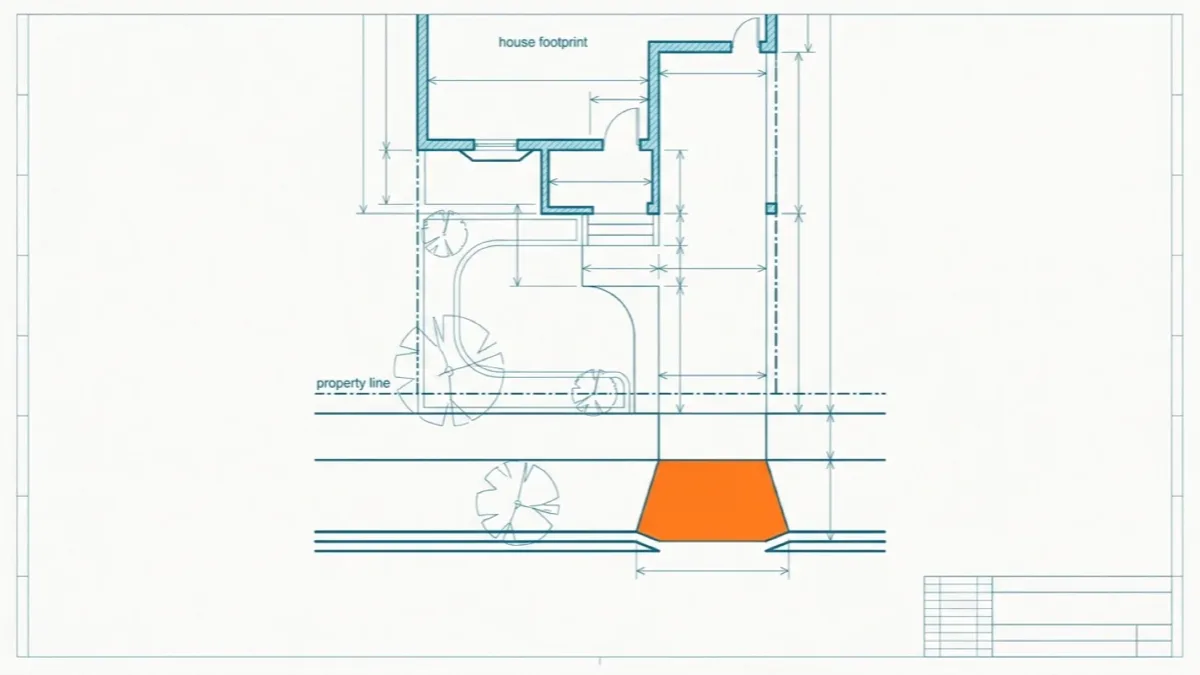
- A Toronto driveway often crosses City land. The boulevard, the sidewalk and the curb in front of your lot are City property, and the boulevard can reach back to your property line.
- The City requires a street work permit from Transportation Services before you install, widen, relocate, rebuild or repave a driveway that crosses City property, or change the curb.
- A new driveway needs zoning approval first. The City says it must be shown by a building permit or a zoning certificate.
- The City will refuse a driveway that is wider than zoning allows, harms a City tree or leads to unauthorized parking.
- A widened driveway used for parking may count as a front yard parking space under Chapter 918 of the Municipal Code, which has its own licence and rules.
Do you need a permit to widen or pave a driveway in Toronto?
Short answer: Usually yes. The main permit is a street work permit from Transportation Services, needed before you widen, relocate, rebuild or repave a driveway that crosses City property. A new driveway also needs zoning approval first, shown by a building permit or a zoning certificate. Both rules are on the City's driveway and walkway permit page.
A driveway looks like one thing you own. In Toronto it is often two pieces of land, handled by two parts of the City. That explains most of the confusing answers homeowners get about this job.
Where does your property end and the City's begin?
Often further back than the edge of the lawn. The City's driveway permit page describes a driveway "that crosses City property, such as the boulevard, sidewalk or curb." It calls the area beyond your property line the "public right of way." Chapter 918 of the Municipal Code defines the boulevard as the part of the street "situated between the travelled portion of the roadway and the adjoining private property, excluding the sidewalk." So the boulevard can include grass on both sides of the sidewalk.
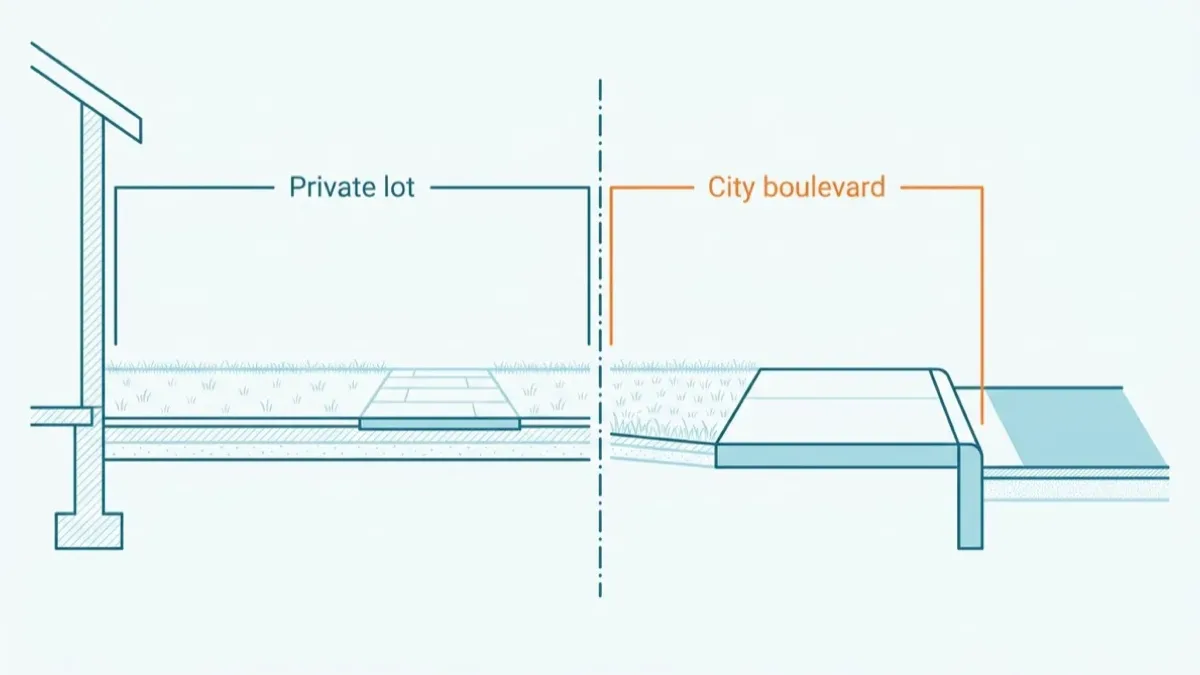
So your driveway may run across City land before it reaches the road. Where the line falls on your lot is shown on a survey of the property.
Work on your side of the line is a zoning question. Work on the City's side needs the City's permission, because it is not your land.
Which permit is it, and who issues it?
Two parts of the City. For a new driveway, the City sets the order.
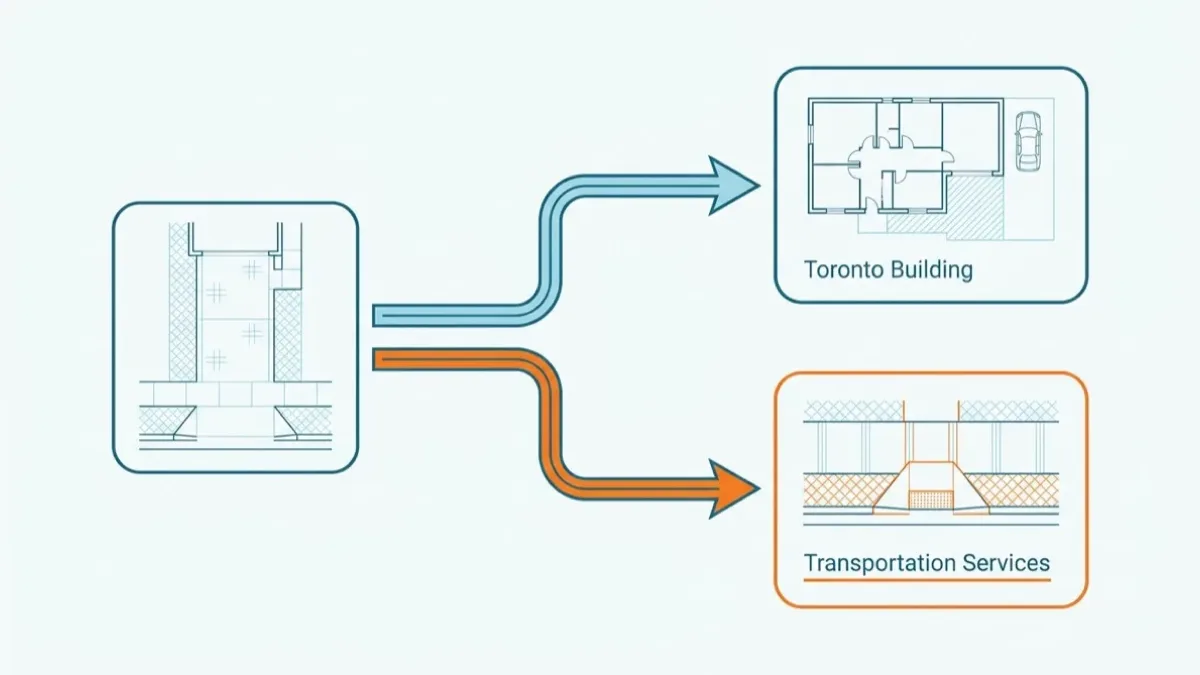
Zoning approval first. The City's driveway permit page says new driveways "must first be approved by Toronto Buildings and Zoning and evidenced by a building permit or zoning certificate." Zoning approval comes from Toronto Building, the City's building permit division. A zoning certificate is its written confirmation that a plan meets the zoning rules. Our guide to checking the zoning of a Toronto property shows how to look up those rules yourself.
Transportation Services, second. The same City page says you must get a street work permit before:
- installing a new driveway or walkway
- widening an existing driveway
- relocating a driveway
- reconstructing or repaving a driveway or walkway
- modifying a curb or driveway entrance
The City adds that "any required sidewalk curb cut and restoration is at separate cost." A curb cut is the lowered section of curb that lets a car cross it.
What does the City ask for, and what will it refuse?
The application needs four things. The City's driveway permit page lists them for a new, widened or relocated driveway:
- drawings of the proposed driveway design and location, prepared to metric scale
- confirmation that the driveway leads to a legal parking area, an internal driveway system or an approved boulevard parking space
- a contractor licensed by the City of Toronto to do driveway paving
- financial security, such as a municipal road damage deposit, which the City returns once the work is confirmed as approved
The same page lists when an application "will not be approved." Four of the reasons matter most for a house:
- it "requires the removal of a City tree or may damage an existing tree"
- it "provides access to unauthorized front, side or rear yard parking"
- it "exceeds the maximum width permitted under the applicable zoning by-law"
- it "extends into the boulevard in front of an adjoining property"
If the driveway does not meet zoning, the City says "approval from the Committee of Adjustment may be required." That is the panel that hears requests to depart from zoning rules. Our guide to building permits versus zoning approval explains how the two reviews differ.
When does a widened driveway become front yard parking?
When the extra space is used for parking. The City's driveway permit page warns that, depending on use and location, the proposal "may be considered a front yard parking space under Zoning Bylaw and Toronto Municipal Code, Chapter 918." It recommends checking with both Toronto Building and the Off-Street Parking Office.
Chapter 918 is the Municipal Code chapter on parking on residential front yards and boulevards. It defines a front yard parking pad as part of "the boulevard and/or front yard" that is built to its rules and "licensed for the purpose of parking a motor vehicle." The licence renews. The City's front yard and boulevard parking page says "an off-street parking permit is required if property owners wish to rent part of the City boulevard to supplement space on private property for parking." Its 2026 fee table, as published, lists an annual renewal of $331.13 plus HST. The same page notes that "the license does not follow the property," so a new owner must apply to transfer it. That is worth checking when you buy a house.
What else can stop or complicate the job?
Trees. The City's tree permit page says "any activity that can cause a street tree of any size to be harmed or removed is prohibited unless authorized with a permit." A driveway that would harm a City tree is also on the refusal list above.
Timing. The City's driveway permit page says applications for new driveway or walkway construction "should be submitted at least eight weeks before work is scheduled to begin."
Enforcement. The same page says "beginning work without the required permit may result in fines." Owners must also restore the boulevard after construction. If they do not, the City may do the work and recover the cost.
What the driveway leads to. A new garage or carport is a building permit question of its own. See detached garage permits in Ontario. If the slope needs a wall to hold it back, see retaining wall permits in Toronto.
Does driveway work show up in the building permit record?
Mostly not. The City's open data that PermitIndex uses is a register of building permits. A street work permit from Transportation Services is a different permit, so a properly permitted curb cut may leave no trace there.
So read the record for what it holds. PermitIndex's permit search, which requires signing in, shows the building work on a property. And a missing driveway entry proves nothing either way, as our guide to the permit history of a house explains for other gaps. If the job included a garage or an addition, that part should appear.
Methodology and limits
How these numbers are calculated
This guide carries no permit statistics. Its rules come from three City of Toronto pages, each linked in the section that uses it. They were read on September 17, 2026 and again on October 14, 2026: the driveway and walkway permit page (date modified July 21, 2026), the residential front yard and boulevard parking page (date modified August 11, 2026) and the page on when to apply for a tree permit (date modified January 29, 2026). The one fee quoted is from the City's 2026 table, as published on that date.
Three limits apply. This is Toronto only; other Ontario municipalities set their own rules, so check with yours. The City can change these pages without notice, so treat its pages as authoritative where they differ from this one. And the permit search linked above is PermitIndex's own product, built from the City's open building permit data. What that data covers, and the site's contact email, are on the data sources page.
Frequently asked questions
- Do I need a permit to widen my driveway in Toronto?
- Yes, if the driveway crosses City property such as the boulevard, sidewalk or curb. The City requires a street work permit from Transportation Services before widening an existing driveway. A new driveway must first be approved for zoning, shown by a building permit or a zoning certificate. The City also refuses a driveway that exceeds the maximum width the zoning by-law allows.
- Do I need a permit to repave my existing driveway?
- If the driveway crosses City property, yes. The City lists reconstructing or repaving a driveway or walkway among the work that needs a street work permit from Transportation Services. That permit covers the part over the boulevard, sidewalk or curb. For the part on your own lot, check whether the work changes the driveway's size or location, which raises zoning questions.
- Who approves a curb cut in Toronto?
- Transportation Services, through the street work permit. The City lists modifying a curb or driveway entrance among the work that needs that permit. It also says any required sidewalk curb cut and restoration is at separate cost, which the City adds to the fees. A new driveway also needs zoning approval first.
- What is front yard parking and do I need a licence?
- Chapter 918 of the Toronto Municipal Code licenses parking pads on the boulevard, the front yard or both. A licence is needed where a by-law would otherwise prohibit that parking. The City says a permit is required to rent part of the boulevard for parking, and it renews yearly. The licence does not follow the property: a new owner must apply to transfer it.
- How far in advance should I apply?
- The City says applications for new driveway or walkway construction should be submitted at least eight weeks before work is scheduled to begin. Allow time before that for zoning approval, because the City says a new driveway must first be approved by Toronto Building. Tell your contractor about both steps before they book a date.