Toronto permit data
Building Permit Transfers in Toronto
Published September 22, 2026
The short version
- Yes, a Toronto building permit can be transferred after a sale, but not automatically. Chapter 363 of the Municipal Code says the City transfers it to the new registered owner only once it has three things.
- Those are a declaration signed by the new owner, a copy of the registered transfer deed and the fee set out in Chapter 441.
- In the declaration, the new owner states that the previous owner authorized the transfer. That is why the question belongs in the sale, not after it.
- If you buy a house with an open permit, the City says you are responsible for it. To keep building, you transfer it. Otherwise the City's steps lead to an inspection, or to revocation if work never started.
- The same by-law section lets a new tenant take over a permit a previous tenant held, with a declaration and a fee but no deed.
Can a building permit be transferred to a new owner in Toronto?
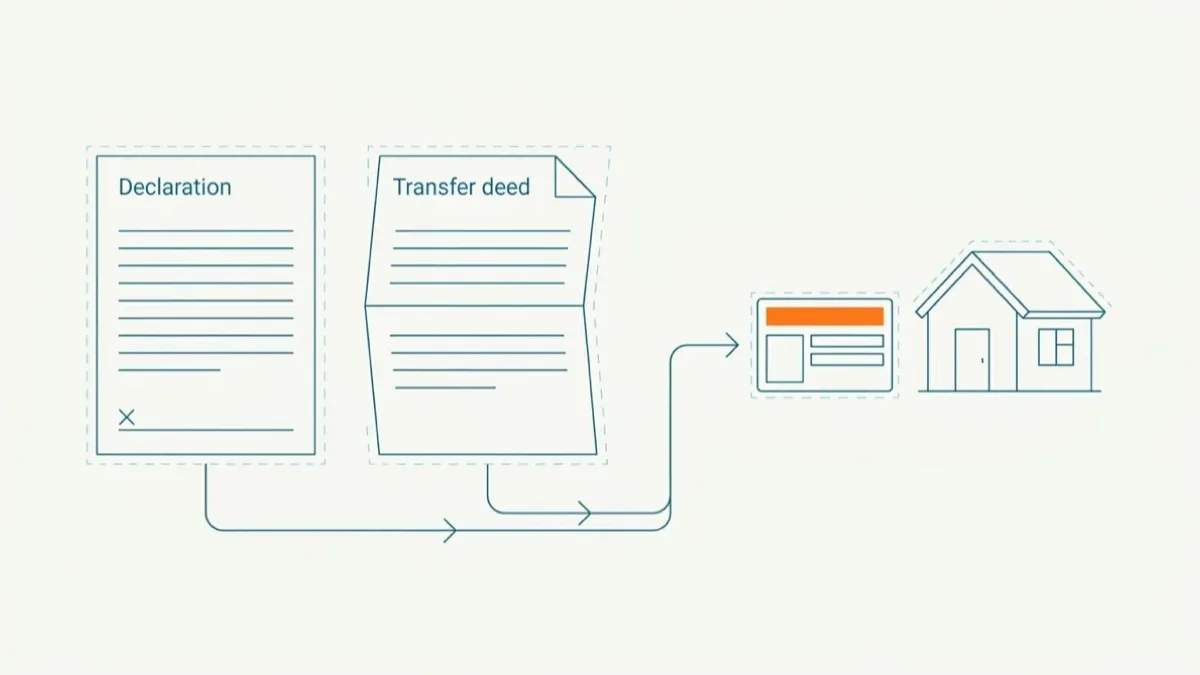
Short answer: Yes, but it does not happen on its own. The rule is section 363-3.13 of the Toronto Municipal Code, Chapter 363. When a property with a permit is sold, the City transfers the permit to the new owner "only upon receipt of" three things. They are a signed declaration, a copy of the registered transfer deed and a fee.
A building permit in Toronto has a holder as well as an address. Chapter 363 defines the permit holder as "the owner to whom a permit has been issued or, where a permit has been transferred, the new owner to whom the permit has been transferred." A sale changes who owns the house. A transfer is the separate step that changes who holds the permit.
What does the City need to transfer a permit?
Section 363-3.13 lists the three items.
- A declaration form, "as prescribed by the Chief Building Official" (the City official in charge of building permits), signed by the new registered owner. It declares that the previous owner of the property authorized the transfer.
- A copy of the transfer deed of land, registered under the Land Titles Act, Ontario's land registration law. It confirms the change of ownership.
- The applicable fee, as set out in Chapter 441, the City's Fees and Charges by-law. The City's building permit fees page lists "Transfer of Permit" at $214.79 per permit, effective January 1, 2026.
The same section covers a permit application that has not been issued yet. A pending application moves to the new owner on the same terms.
What does the declaration form say?
Toronto Building publishes the form as the Declaration Transfer of Permit, form 14-0104. It has two pages. You fill in page 1 to transfer a permit "from the previous registered owner(s) to the current registered owner(s)," and page 2 for a change of tenant.
The owner's page asks for the address, the permit or application number and the new owner's contact details. Then comes the declaration. The current owner declares that the transfer of the permit or application "has been authorized by the previous owner of the property." The form adds that "a true copy of the transfer deed of land registered in accordance with the Land Titles Act confirming the transfer of ownership of the property is enclosed."
That first sentence is the practical point. The new owner signs, but the statement is about the seller's consent. If you are buying a house with a permit you want to use, get the seller's authorization as part of the deal. The form does not say where to send it. Its privacy notice lists Toronto Building's district offices and 416-397-5330, the same number the City gives for inspections, so ask there before you submit.
Can a tenant take over a permit?
Yes. Section 363-3.13 has a second part for tenants. If a tenant held a permit or applied for one, and the property is then leased to a new tenant, the City transfers it to the new tenant on receipt of a declaration and the fee. The declaration states that the previous tenant authorized the transfer. The tenant version does not ask for a deed.
What if you bought a house with an open permit?
An open permit is one that has not been officially closed. The City says a permit "remains open until all required inspections are completed and the permit is officially closed." It is direct about who inherits one. Its Closing Building Permits page says: "As the current property owner, you are responsible for any outstanding permits." It adds: "If the work was done by a previous homeowner, you are still responsible for closing the permit."
The page sets out what to do, depending on what happened.
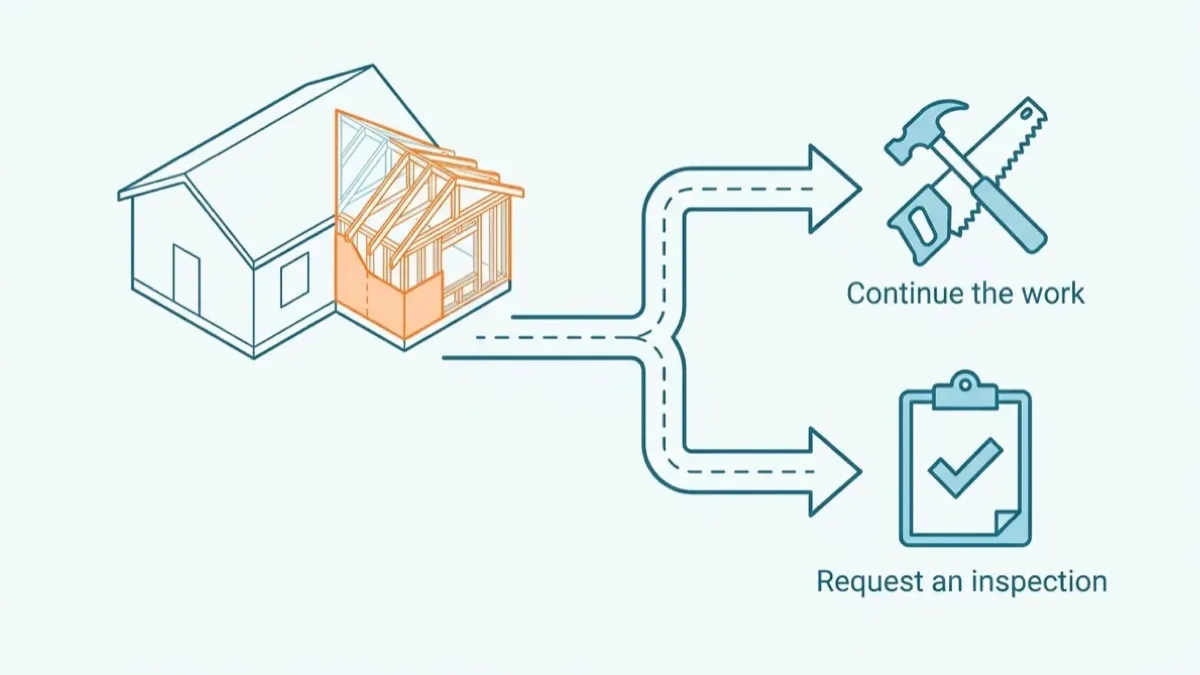
- The previous owner started the work and you want to continue. The City says you "must apply for a permit transfer to take over the permit." That is the section 363-3.13 process above.
- The previous owner started the work and you do not want to continue. The City says you "must request an inspection so Toronto Building can assess the next steps for permit closure."
- The work was finished but never inspected. You must schedule a final inspection. The City says you may need reports from an architect or engineer confirming the work complies.
- You are unsure what was done. The City suggests contacting the previous owner or hiring an architect or engineer to assess the work.
The City lists Toronto Building Inspections at 416-397-5330 or TOBldgInsp@toronto.ca for a new owner who gets a notice about a permit they did not take out. Our guide to Toronto building permit inspections explains how inspections are booked.
What happens to a permit nobody acts on?
It does not stay open forever. The City's Closing Building Permits page says a Notice of Intention to Revoke is issued "when a building permit is more than 18 months old and no inspections have been requested." The notice sets a date. If you do not respond by then, the City says the permit will be revoked.
A revoked permit leaves a new owner with a harder problem. The City says that to start or resume construction after revocation, "you will need to reapply for a new building permit and pay the required application fees," and that work done under the revoked permit "may be considered a violation." Our guide to whether building permits expire in Ontario covers revocation in more detail.
An application that stalls has its own clock. Section 363-3.12 of Chapter 363 says an application that "remains inactive or incomplete for six months after it is made" may be deemed abandoned without notice.
How do you check for open permits before you buy?
Start with the City's Building Permit Application and Inspection Status webpage. The Closing Building Permits page says it holds active permits that are 10 years old or less from the date of application. It also holds permits closed or cancelled within the last month. Our walkthrough on checking a Toronto building permit's status shows how to read it.
PermitIndex's permit search, which requires signing in, is built from the City's open data on active building permits. Because that is the active register, a permit that has been closed drops out of it. Our guide to a house's permit history covers what the record can and cannot tell you.
The City also warns why this matters at closing. Open permits "may delay or complicate real estate transactions," and "in some cases, a lawyer may advise against purchasing a property with an outstanding permit." If you find work with no permit at all, that is a different problem, covered in buying a house with unpermitted work.
Methodology and limits
This guide carries no permit statistics by design. Every rule above comes from four City of Toronto documents, read on September 22, 2026. The first is Chapter 363 of the Toronto Municipal Code (consolidation stamped March 22, 2024). The second is the Declaration Transfer of Permit form 14-0104 (revision 2020-02). The others are the Closing Building Permits page (date modified September 18, 2025) and the building permit fees page (date modified June 19, 2026). Each is linked where the article first draws on it. Later mentions of "the City's page" refer back to that link.
Three limits apply. These are Toronto's rules; other Ontario municipalities handle permit transfers under their own by-laws. The City's pages are authoritative where they differ from this one. And the permit search linked above is PermitIndex's own product, built from the City's open building permit data. What that data covers, and the site's contact email, are on the data sources page.
Frequently asked questions
- Does a building permit transfer automatically when a Toronto house is sold?
- No. Section 363-3.13 of the Toronto Municipal Code says that when a property with a permit or permit application is sold, the Chief Building Official transfers it to the new registered owner only on receipt of a declaration form signed by the new owner, a copy of the transfer deed registered under the Land Titles Act and the fee set out in Chapter 441. The permit does not follow the house on its own.
- What form do you use to transfer a building permit in Toronto?
- Toronto Building publishes a two-page Declaration Transfer of Permit form. Page 1 is for a change of registered owner and page 2 is for a change of tenant. The owner version asks you to declare that the transfer has been authorized by the previous owner and to enclose a true copy of the registered transfer deed.
- Am I responsible for a permit the previous owner took out?
- The City says yes. Its Closing Building Permits page states that as the current registered owner of the property, you are responsible for any outstanding building permits, even if a previous homeowner obtained them. It asks you to contact Toronto Building Inspections to confirm whether any work was done under the permit.
- What if I do not want to finish the previous owner's project?
- The City's page covers that case. If the previous owner started the work and you do not want to continue, you must request an inspection so Toronto Building can assess the next steps for closing the permit. The same page's general steps for closing a permit add that if work was never started, you can ask Toronto Building to revoke it.
- Does an open permit stop a house sale?
- The City warns it can get in the way. Its Closing Building Permits page says open permits may delay or complicate real estate transactions, because buyers and lenders may want proof the work was completed and inspected, and that in some cases a lawyer may advise against buying a property with an outstanding permit.