Toronto permit data
HVAC Licences in Ontario: What Homeowners Should Verify
Published July 24, 2026
The short version
- Ontario has no single HVAC licence. Gas, refrigeration, and electrical work each answer to a different regulator, and a legitimate contractor can show a credential for every part of your job.
- Gas work is TSSA territory: the business must be a registered fuels contractor and the person on site must hold a gas technician certificate.
- Refrigeration and air conditioning mechanic are compulsory trades, and anyone practising them appears in the Skilled Trades Ontario public register, which is free to search.
- A licence belongs to the person or business. A permit belongs to the project. Hiring someone fully licensed does not remove the permit requirement when the system changes.
HVAC licences in Ontario: what homeowners should verify
Short answer: Ontario has no single "HVAC licence." A legitimate HVAC contractor carries a stack of credentials: TSSA gas technician certification for anything fuel-fired, a compulsory-trade certificate from Skilled Trades Ontario for refrigeration and air conditioning work, an ODP card for handling refrigerant, and an ESA-licensed electrical contractor for the wiring. In Toronto, heating installers need a municipal licence on top. Every one of these can be checked in a public register, for free, before you sign anything.
That stack exists because an HVAC job crosses three different safety regimes at once: fuel, refrigerant, and electricity. Each has its own regulator, and each regulator publishes a lookup a homeowner can use. This guide walks through who regulates what, which registry answers which question, and where the licence system ends and the building permit system begins. The permits themselves are public: PermitIndex indexes 30,910 Toronto building permits issued in the trailing twelve months as of Oct 9, 2026, and HVAC is one of the trades you can watch directly.
Why there is no single HVAC licence in Ontario
"HVAC" is a job description, not a legal category. The law regulates the hazardous parts of the job separately, so the credentials follow the hazards rather than the trade name.
Gas and other fuels fall under the Technical Standards and Safety Authority, the TSSA, which certifies the people and registers the businesses. Refrigeration and air conditioning mechanic is a compulsory trade under Skilled Trades Ontario, meaning it is illegal to practise it without being registered. Refrigerant handling has its own environmental certification. Electrical connections run through the Electrical Safety Authority, the ESA. And municipalities can layer a business licence on top, which Toronto does for heating contractors.
The practical consequence for a homeowner: "are you licensed?" is the wrong question, because the honest answer is "for which part?" The right move is to ask what each person on the job will be doing, then check the credential that governs that work. The sections below map the work to the register.
Who can legally work on gas furnaces and boilers?
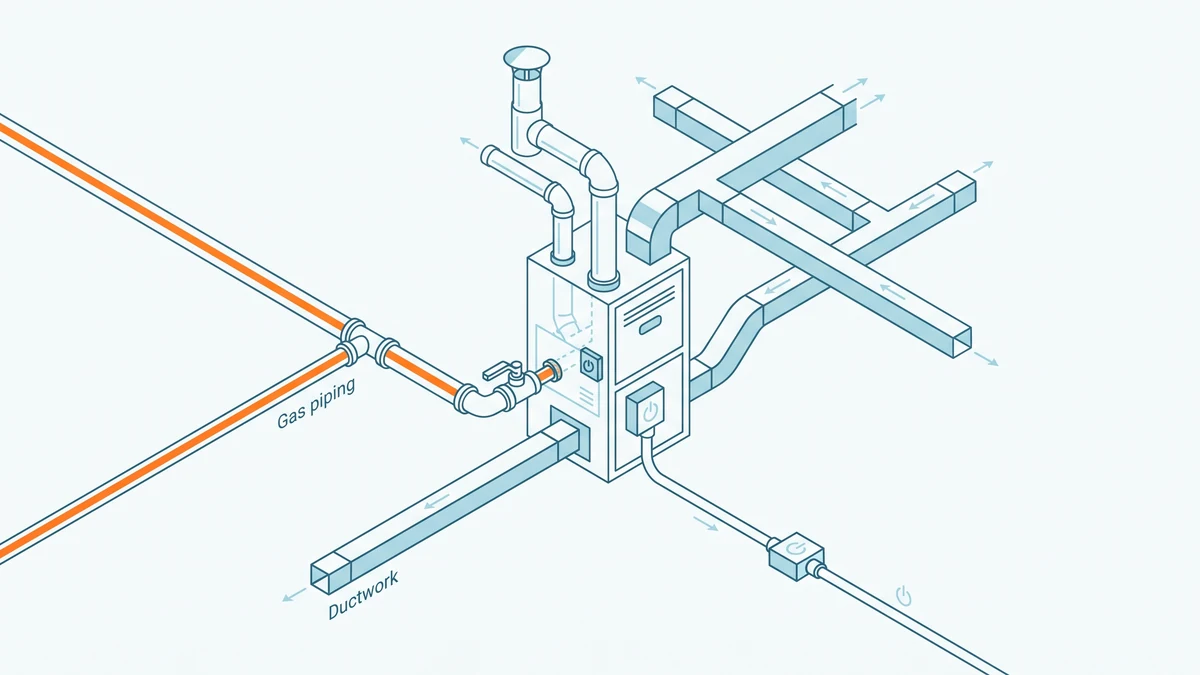
Anything that connects to natural gas or propane, a furnace, a boiler, a gas water heater, a gas line, is regulated by the TSSA. Two layers matter, and you can verify both.
The business must be a TSSA-registered fuels contractor. Registered contractors are the only businesses legally authorized to do fuels work in Ontario, and the TSSA publishes a lookup tool for confirming a company's registration before you hire.
The person doing the work must hold a gas technician certificate. These come in classes, commonly referred to as G1, G2, and G3, which differ in the size and kind of equipment the holder may work on. The class system is the TSSA's to define, so rather than memorizing thresholds, ask the technician which certificate they hold and confirm it covers residential furnace or boiler work. A certified technician expects the question.
Quotable: In Ontario, gas work is double-gated: the company needs a TSSA fuels contractor registration and the person on site needs a gas technician certificate. A quote from a company that can show neither is not a bargain, it is an uninsured gas connection.
Who can legally install air conditioners and heat pumps?
Refrigeration and air conditioning systems mechanic, trade code 313A, and its residential counterpart, 313D, are compulsory trades in Ontario. Compulsory means practising without being registered is against the law, not merely against best practice. Certified journeypersons and registered apprentices in these trades appear in the Skilled Trades Ontario public register, which anyone can search by name at no cost.
On top of the trade certificate sits refrigerant handling. Ontario requires a certificate to handle refrigerants, commonly carried as an ODP card, for buying refrigerant and working on the sealed side of a system. It comes from an approved environmental training course and is renewed periodically, and it exists because refrigerants are regulated substances with atmospheric effects, not because of a safety risk to your house.
So for a heat pump or central air installation, the verification is two questions: is the mechanic in the Skilled Trades Ontario register, and do they hold a refrigerant handling card. If the answer to either is a shrug, keep shopping.
Who handles the electrical connection?
A new air conditioner or heat pump usually needs a dedicated circuit, and that wiring belongs to Ontario's electrical safety regime. Electrical contracting businesses are licensed through the Electrical Safety Authority, carry an ECRA/ESA licence number, and can be confirmed through the ESA's contractor lookup. Electrical work also typically involves a notification to the ESA and its own inspection stream, separate from any building permit.
There are narrow exemptions around what an HVAC installer may connect as part of their own scope, and the boundaries are the ESA's to draw, not a contractor's to assert. The clean question to ask is: who is doing the electrical connection, and is it being filed with the ESA? A contractor with nothing to hide answers in one sentence. If the plan is for nobody to tell the ESA anything, that is your answer about the rest of the job too.
Does Toronto require its own heating contractor licence?
Yes, for installation work. Toronto licenses heating contractors at the municipal level: businesses installing warm air, hot water, or steam heating equipment need a City licence, and obtaining one requires showing TSSA credentials among other documentation. Gas burner work itself stays provincial, under the TSSA, so the municipal licence sits alongside the provincial certificates rather than replacing them.
This is Toronto's rule and other municipalities differ, so outside Toronto, check your own city's licensing office before assuming any of it applies. Toronto also licenses general renovation businesses separately, which we cover in our guide to the Toronto building renovator licence. If a Toronto contractor's paperwork stack looks thick, that is what correct looks like.
Is a licence the same as a building permit?
No, and conflating them is the most expensive misunderstanding in this topic. A licence attaches to a person or business and says they may legally do a kind of work. A permit attaches to a project and says the City has reviewed this specific job. You can hire a fully licensed contractor and still have an illegal installation if the permit was skipped.
For HVAC, the permit line generally falls where the system changes: new ductwork, a new or relocated system, or a heat pump replacing a furnace generally needs a mechanical permit, while a like-for-like swap often does not. The details, including what Toronto charges and requires, are in our guides to HVAC permit cost and requirements in Toronto and furnace and AC replacement permits in Ontario. Who should file the paperwork, you or the contractor, is its own question with a revealing answer, covered in who pulls the permit.
The permit record is also your free verification tool after the fact. Every permit issued in Toronto becomes a public record you can search by address, so you can confirm the permit your contractor promised to pull actually exists, and see what mechanical work is being permitted on streets like yours through the live HVAC permits in Toronto page.
The checklist: what to verify before you hire
Each check is free and takes minutes. A contractor who resents them is telling you something.
- Company gas registration. If the job touches gas, confirm the business in the TSSA's registered fuels contractor lookup.
- Technician's gas certificate. Ask which gas technician class the person on site holds and that it covers your equipment.
- Trade certificate. For AC, heat pump, or refrigeration work, find the mechanic in the Skilled Trades Ontario public register.
- Refrigerant card. Ask to see the ODP card of whoever will open the refrigerant circuit.
- Electrical plan. Ask who does the wiring, their ECRA/ESA licence number, and whether the work is filed with the ESA.
- Municipal licence. In Toronto, confirm the heating contractor licence with the City.
- The permit. Ask who pulls the mechanical permit, then verify it later in the public permit record.
None of this substitutes for the usual hiring sense, written quotes, references, insurance. It is the layer beneath that: confirming the people touching fuel, refrigerant, and wiring are the people Ontario's regulators say may touch them.
How these numbers are calculated
The permit count on this page is the number of building permits issued in the City of Toronto in the trailing twelve months, computed live from the City's open dataset of active building permits by our citywide aggregate and stamped with the newest issue date in that data. It is not a hand-entered figure and it refreshes as the City's record does. The City publishes permits that are currently active, and records leave the dataset as projects close out, so the figure describes permits presently on record in Toronto, not a historical census.
Licensing rules are set by the TSSA, Skilled Trades Ontario, the ESA, the Province, and the City of Toronto, and are cited from their published pages rather than computed from our data; they can change, so the linked registries are the authority. For the underlying permit dataset and its licence, see the data sources page.
Frequently asked questions
- Do HVAC contractors need a licence in Ontario?
- Yes, for the regulated parts of the work. Anyone connecting or servicing gas-fired equipment needs TSSA gas technician certification, refrigeration and air conditioning mechanic work is a compulsory trade requiring registration with Skilled Trades Ontario, and electrical connections run through Ontario's electrical safety regime. No one credential covers all of it, which is why a full HVAC job usually involves more than one ticket.
- Can a homeowner do their own HVAC work in Ontario?
- Some of it. Swapping a filter, cleaning ducts, or replacing a thermostat that does not touch line voltage is generally open to anyone. Gas connections are not: work on gas-fired equipment requires certification even in your own home, and buying and handling refrigerant requires its own certification. When in doubt, check with the TSSA before touching anything connected to a fuel line.
- What is an ODP card and why does my AC technician need one?
- It is the certification Ontario requires for buying and handling refrigerants, issued after an approved environmental training course. Refrigerants are regulated because of their effect on the atmosphere, so a technician who opens the sealed side of an air conditioner or heat pump is expected to hold one alongside their trade certificate.
- If my contractor is certified with the TSSA, do I still need a building permit?
- Often yes. The certification says the person may legally do the work; the permit says the City has reviewed the project. Adding ductwork, installing a new system, or replacing a furnace with a heat pump generally needs a mechanical permit no matter who does it. Confirm your specific project with your municipal building department before work starts.
- What can go wrong if I hire an unlicensed HVAC contractor?
- The immediate risks are safety ones: gas leaks and carbon monoxide are the reason fuels work is regulated at all. Beyond that, unlicensed work can void insurance coverage, fail inspection, and surface as a problem when you sell. The credential is also your recourse: a regulator can discipline a licence holder, but has little hold over someone working outside the system.