Toronto permit data
How Much Is a Building Permit in Ontario? Costs by City
Published July 24, 2026
The short version
- There is no provincial price list. Each Ontario municipality sets its own building permit fees under the Building Code Act.
- Most cities price permits per square metre of floor area, with the rate depending on the building type. Some price renovations as a share of construction value instead.
- Every fee schedule carries a minimum fee, so even minor work pays a floor price.
- Fees are capped at cost recovery, and the permit fee is often smaller than the other lines around it, like development charges and drawings.
How much is a building permit in Ontario?
Short answer: It depends on the municipality, because Ontario has no provincial fee schedule. Each city sets its own rates under the Building Code Act, and most calculate the fee per square metre of the floor area you are building or altering. Small projects generally pay a minimum fee in the low hundreds of dollars; a new house runs into the thousands. Your municipality's published fee schedule is the only authoritative price.
That answer frustrates people who want one number, but the structure is the useful part. Once you know which formula your municipality uses, you can estimate your own fee in a few minutes instead of guessing from someone else's project. This guide explains the fee models Ontario cities use, shows how Toronto's schedule works against Ottawa's and Mississauga's, and lists what gets added on top. Where a dollar figure appears below, it is quoted from a municipal fee schedule with the publication year, and the linked schedule is the source of truth.
How do Ontario municipalities calculate permit fees?
Three models cover almost every fee schedule in the province.
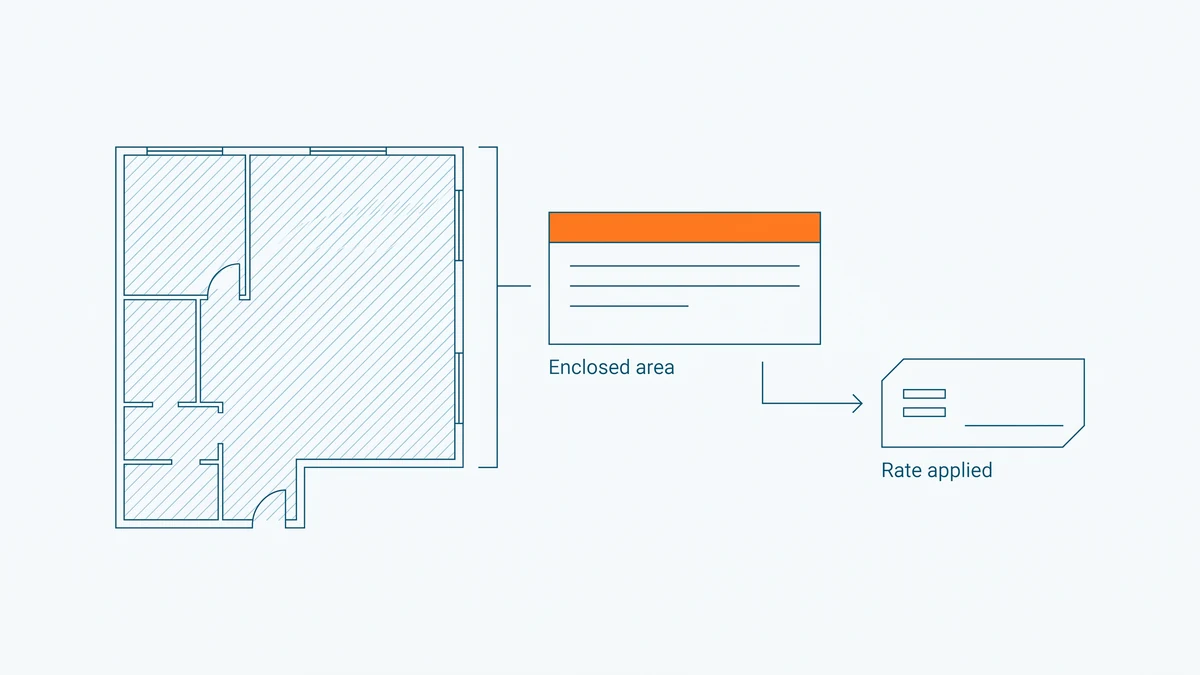
The most common is a service index: a rate per square metre that varies by building classification, multiplied by the floor area of the work. A house, an office, and a factory each carry a different rate because each takes a different amount of review and inspection effort. New construction and additions are usually priced this way.
The second model prices work as a share of construction value, typically a set amount per thousand dollars of project cost. Municipalities often apply it to renovations inside an existing footprint, where there is no new floor area to measure.
The third is a flat fee per work type, common for small scopes like water heaters, fireplaces, or demolition.
Every schedule adds a minimum fee, so a permit never costs less than the floor price, and most reserve hourly rates for extra review rounds. What none of this is: profit. Under the Building Code Act, a municipality cannot collect more in permit fees than the anticipated reasonable cost of administering and enforcing the Code in its territory.
Quotable: For new construction in most of Ontario, the permit fee is priced on floor area, not budget. Two identically sized builds pay the same permit fee even if one costs twice as much to construct.
What does a building permit cost in Toronto?
Toronto prices most permits with one formula: a service index rate for the building classification, multiplied by the floor area of the work. On the schedule Toronto Building publishes for 2026, the rate for new residential floor area is $18.56 per square metre, and every application pays at least the minimum fee of $214.79. Alteration and renovation work uses lower rates than new construction. These figures change when the schedule does, usually each January, so confirm against the City's live page before budgeting.
That schedule gets applied at serious volume. Toronto issued 30,910 building permits over the trailing twelve months as of Oct 9, 2026, every one of them fee-paid under this structure. You can search any Toronto address to see what has been permitted there, which is a practical way to gauge what projects like yours actually file. For the full rate table and worked examples, see the Toronto permit cost guide and the breakdown of how Toronto calculates its fees.
What do other Ontario municipalities charge?
The models repeat across the province; the rates and minimums move.
Ottawa runs two models side by side in its comprehensive Building Code fee schedule as published for 2026. New construction and additions are priced per square metre of new floor area, while renovation work inside an existing building is priced at $12.75 per thousand dollars of construction value, with a minimum fee of $117. A project with both new floor area and renovation pays both calculations combined.
Mississauga publishes a per-square-metre schedule of its own, with a minimum fee of $244 for typical residential work as published for 2026 on its building permit cost page.
Hamilton calculates most fees per square metre under its building by-law; the current rates and minimum are on the City's building permit fees page. London folds its permit rates into a consolidated fees and charges by-law.
The practical takeaway is that the pricing model matters more than the city name. Where fees ride on floor area, your cost is predictable from your drawings. Where they ride on construction value, a bigger budget means a bigger fee for the identical footprint.
Why do permit fees differ between municipalities?
Because each fee schedule is a local budget document, not a market price. The Building Code Act caps what a municipality may collect at the reasonable cost of running its own building department, and those costs differ: staffing levels, volume of applications, how much digital infrastructure the department carries, and how its council chooses to classify building types all move the rates. Municipalities may also build a reserve-fund component into fees to keep the department staffed through slow construction years, and that reserve can lawfully fund only Building Code administration and enforcement.
So a cheaper permit does not signal a looser process, and an expensive one does not signal gold-plated service. It mostly reflects what plan review and inspection cost to deliver in that particular city, spread across the permits it expects to issue. Comparing two cities' fees tells you about their building departments, not about their strictness.
What costs come on top of the permit fee?
The permit fee is frequently the smallest line in the approvals budget, so treat it as a starting point.
Development charges are the big one. They are a separate levy on new development, collected by the municipality (and sometimes a region and school boards) to fund infrastructure, and on a new house they can exceed the permit fee many times over. They generally apply to new dwellings and major intensification, not to interior renovations. Your municipality publishes its own schedule.
Drawings and design work usually cost more than the permit. Most applications need scaled drawings, and many need a designer with a BCIN or a licensed professional, which is a private cost the city does not control.
Related approvals can each carry their own fee: a zoning review or preliminary project review, conservation authority permission near regulated areas, tree or road-occupancy permits, and deposits some municipalities take against damage or incomplete work. Requirements vary by site, so confirm the full list with your building department, and for Toronto projects check Toronto Building directly before you commit a budget.
How can you estimate your permit fee before applying?
Work the formula your municipality publishes rather than borrowing a neighbour's number.
- Find the current fee schedule on your municipality's website. Look for the effective year; most schedules reset each January.
- Identify your work class: new construction, addition, or alteration, and the building type. This picks the rate.
- Measure the floor area of the work in square metres if your city prices by area, or total your construction value if it prices renovations by value.
- Multiply, then check the minimum fee. If your result lands below the minimum, the minimum is your fee.
- Call the building department to confirm anything ambiguous. Classification questions are theirs to answer, and getting the class wrong is the most common estimating error.
For project-specific walkthroughs, see the deck permit cost guide. And if the timeline matters as much as the fee, the Toronto permit wait times page shows the observed lag between application and issuance, by trade, from Toronto's open permit data.
How these numbers are calculated
The one live figure on this page is the count of building permits issued in the City of Toronto over the trailing twelve months, computed by the seo_citywide_12mo aggregate over the City's open data and stamped with the newest issue date in that record. It is a Toronto-only number: PermitIndex holds no live permit data for other Ontario municipalities. The City's dataset covers active permits, and records leave it as projects close out, so the count describes permits currently on record rather than a historical census.
Every dollar amount above is a regulatory fee quoted from a municipal fee schedule, linked at the point of the claim with the year of publication. Fee schedules change, usually each January, so treat the linked schedule as authoritative and the figures here as a snapshot. Full sourcing for the permit data is on the data sources page.
Frequently asked questions
- Are building permit fees the same everywhere in Ontario?
- No. The Building Code Act lets each municipality set its own fee schedule, capped at what it reasonably costs to run its building department. The result is that the same project can carry a noticeably different permit fee in two neighbouring cities.
- Can a municipality charge whatever it wants for a permit?
- Not legally. Provincial law caps permit fees at the anticipated reasonable cost of administering and enforcing the Building Code in that municipality. Fees can include a reserve-fund component to keep the department running through slow years, but the money cannot subsidize unrelated city services.
- Does the building permit fee include development charges?
- No. Development charges are a separate levy collected on new development, often at permit issuance, and on a new build they can dwarf the permit fee itself. Check both lines with your municipality before budgeting a project.
- Is a permit fee refundable if I withdraw my application?
- Usually a portion is, on a sliding scale that shrinks as review work progresses. Each municipality's building by-law sets its own refund rules, so ask the building department before you withdraw rather than assuming a full refund.
- Why is there a minimum permit fee for small projects?
- Because even a small permit triggers plan review and at least one inspection, and the fee has to cover that staff time. Municipalities set a floor price so minor work does not run below the cost of processing it.