Toronto permit data
Are Building Permits Public Record in Ontario?
Published July 23, 2026
The short version
- Yes. Building permit records in Ontario are public, and Toronto publishes its active permits as open data anyone can search.
- You can look up permits by street address without an account, a lawyer, or a formal records request.
- The public record shows what was permitted and its status. It does not show the owner's identity, drawings, or inspection notes.
Are building permits public record in Ontario?
Short answer: Yes. A building permit issued by an Ontario municipality is public information, and Toronto publishes its active permits as an open dataset you can search by address for free.
A building permit is not a private document between the owner and the City. The record of what was permitted, where, and its current status is open to anyone who asks. Most Ontario municipalities will disclose that record on request. Toronto goes a step further and publishes its active building permits as open data, so you do not need to file a request or visit a counter to read them.
That open record is the entire basis for this site. PermitIndex indexes 30,910 Toronto building permits issued in the trailing twelve months as of Oct 9, 2026, drawn straight from the City's published data. You can search any Toronto address and see the permits on file in seconds, with no login. The rest of this guide covers what that record does and does not tell you, and how to read it.
What "public record" actually means here
Public record means the fact of the permit is disclosable. It does not mean every document in the file is published. It helps to separate the two.
What the public permit record shows:
- The property address the permit was issued against.
- The type of work, classified by trade and permit type.
- The permit status: whether it is under review, issued, or closed.
- The dates the City recorded for the application and issuance.
What it does not show:
- The owner, the applicant, or the contractor by name.
- The architectural drawings or engineering documents filed with the application.
- Inspection results, deficiency notes, or correspondence with the plans examiner.
So the record answers "what has been permitted at this address, and where does it stand," and it stays silent on who and how well. That boundary is deliberate. It is why a permit search sits alongside a home inspection rather than replacing one, and it is why you can research a property without exposing anyone's personal information.
Why the record is public in the first place
Two forces make permit information open. The first is the nature of a municipality: a City is a public body, and the permits it issues are records of a regulatory act, not private correspondence. The second is Ontario's access-to-information regime. Municipal records are governed by the Municipal Freedom of Information and Protection of Privacy Act, which starts from a presumption of openness for records that are not personal information. The City of Toronto's building and permits service is built around that presumption, which is why the active-permit dataset can be published for anyone to search.
The practical upshot: you do not need a reason, a relationship to the property, or a professional's help to look up a permit. The bar is that the information exists in the City's record and is not somebody's private data.
How to look up a permit by address
You have two routes, one official and one faster.
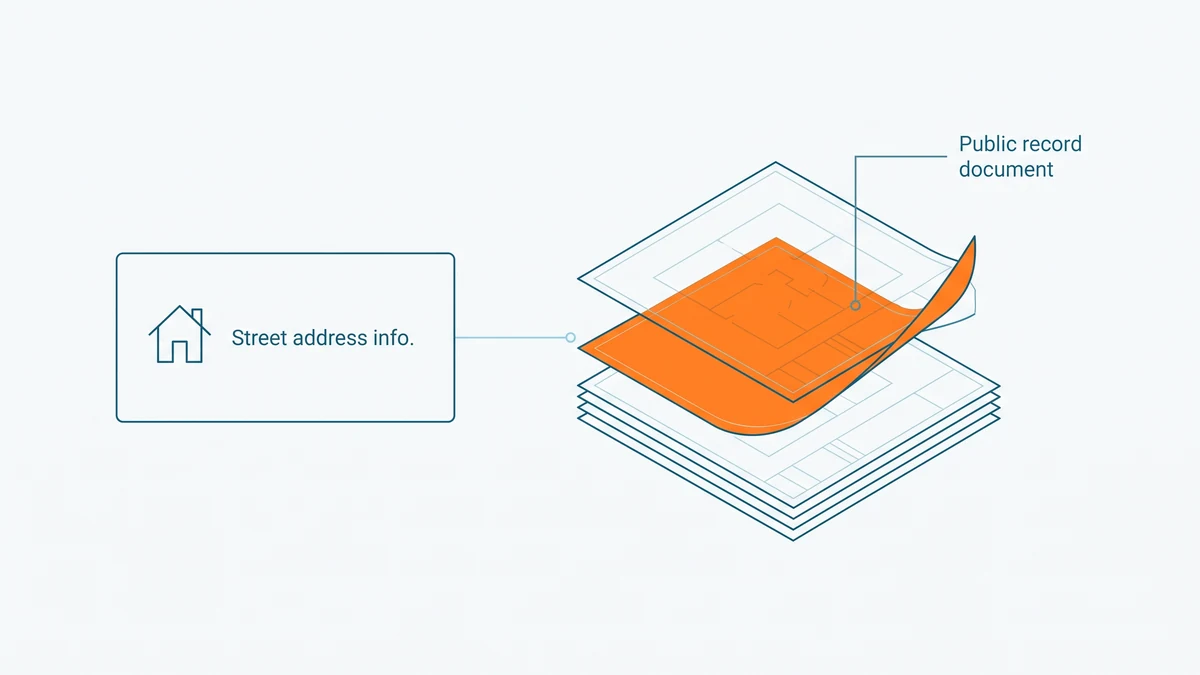
The official route is the City of Toronto's open-data record, which underlies everything here. It is authoritative and free, and it is the right citation when you need one. It is published through the City's Open Data portal, and the data sources page explains exactly which dataset that is and how often it refreshes.
The faster route is to search by address on PermitIndex. Type a street address and you get the permits the City holds for it, already classified by trade and dated, without reading a raw data file. If you are weighing how long a project might take once it is filed, the Toronto permit wait times page reports the median approval lag by trade from the same record.
How to read a permit's status
The status field is where most confusion happens, so it is worth reading plainly. A permit under review has been applied for but not yet issued: the City is still examining the plans. An issued permit means the work is authorized and may be underway. A closed or completed permit means the file is done, usually after a final inspection. A revoked or cancelled permit never proceeded.
The status tells you where the paperwork stands. It does not certify the quality of the work or that every inspection passed cleanly, because inspection detail is not part of the public dataset. A permit can be issued and the project never built, or closed on paper while a punch list lingers. Treat status as a project's paperwork state, not a warranty, and pair it with your own inspection when the stakes are a purchase. When a listing claims a renovation was "fully permitted," the status field is where you check that claim against the City's own record rather than the seller's word.
The one limit worth stating plainly
The City's open dataset covers active permits. Records leave it as projects close out and age off. That means an address with no permits on record is not proof that no work was ever permitted there, only that nothing is currently on the active register. For a recent renovation the record is reliable; for work done decades ago it may simply have aged out. Read an empty result as "nothing active," not "nothing ever."
If you do find work at a property that has no matching permit and clearly should have one, that is a question for a qualified inspector or the City's building division, not something the public record resolves on its own. The record is a strong first pass, not the final word.
How these numbers are calculated
The permit count on this page is the number of building permits issued in the City of Toronto in the trailing twelve months, computed live from the City's open dataset of active building permits and stamped with the newest issue date in that data. It is not a hand-entered figure and it refreshes as the City's record does.
One limitation applies to every number here: the City publishes permits that are currently active, and records leave the dataset as projects close out. So this describes permits presently on record, not a complete historical census, and it is scoped to Toronto. For the underlying dataset and its licence, see the data sources page.
Frequently asked questions
- Can I see permits on a house before I buy it?
- You can see the permits the City currently holds on record for that address, including the type of work and whether each permit is open, closed, or still under review. What you cannot see is whether unpermitted work was done, which is why a permit search complements rather than replaces a home inspection.
- Does the public permit record show who owns the property?
- No. The published permit record describes the work, the address, and the status. It does not publish the owner, the applicant, or the contractor, and PermitIndex does not either.
- Do I have to file a Freedom of Information request to see a permit?
- Not for the basic record. Toronto publishes active building permits as open data, so the fact of a permit and its status are available without an FOI request. You would only need a formal request to obtain the filed drawings or the internal file, which are not part of the open dataset.
- Are permit records public in other Ontario cities too?
- The public-record principle applies province-wide because permits are held by municipalities, which are public bodies. What differs is access. Toronto publishes a searchable open dataset; many smaller municipalities still require a phone call, a counter visit, or a records request to read the same information.
- Why is there no permit on record for obvious work at an address?
- Two common reasons. The work may have been minor enough not to require a permit, or the permit may have closed and aged out of the City's active-permit dataset. An empty result means nothing is currently on the active register, not that no work was ever permitted.